Semantic queries allow for queries and analytics of associative and contextual nature. Semantic queries enable the retrieval of both explicitly and implicitly derived information based on syntactic, semantic and structural information contained in data. They are designed to deliver precise results (possibly the distinctive selection of one single piece of information) or to answer more fuzzy and wide open questions through pattern matching and digital reasoning. Semantic queries work on named graphs, linked data or triples. This enables the query to process the actual relationships between information and infer the answers from the network of data. This is in contrast to semantic search, which uses semantics (meaning of language constructs) in unstructured text to produce a better search result. (See natural language processing.) From a technical point of view, semantic queries are precise relational-type operations much like a database query. They work on structured data and therefore have the possibility to utilize comprehensive features like operators (e.g. >, < and =), namespaces, pattern matching, subclassing, transitive relations, semantic rules and contextual full text search. The semantic web technology stack of the W3C is offering SPARQL to formulate semantic queries in a syntax similar to SQL. Semantic queries are used in triplestores, graph databases, semantic wikis, natural language and artificial intelligence systems. == Background == Relational databases represent all relationships between data in an implicit manner only. For example, the relationships between customers and products (stored in two content-tables and connected with an additional link-table) only come into existence in a query statement (SQL in the case of relational databases) written by a developer. Writing the query demands exact knowledge of the database schema. Linked-Data represent all relationships between data in an explicit manner. In the above example, no query code needs to be written. The correct product for each customer can be fetched automatically. Whereas this simple example is trivial, the real power of linked-data comes into play when a network of information is created (customers with their geo-spatial information like city, state and country; products with their categories within sub- and super-categories). Now the system can automatically answer more complex queries and analytics that look for the connection of a particular location with a product category. The development effort for this query is omitted. Executing a semantic query is conducted by walking the network of information and finding matches (also called Data Graph Traversal). Another important aspect of semantic queries is that the type of the relationship can be used to incorporate intelligence into the system. The relationship between a customer and a product has a fundamentally different nature than the relationship between a neighbourhood and its city. The latter enables the semantic query engine to infer that a customer living in Manhattan is also living in New York City whereas other relationships might have more complicated patterns and "contextual analytics". This process is called inference or reasoning and is the ability of the software to derive new information based on given facts. == Articles == Velez, Golda (2008). "Semantics Help Wall Street Cope With Data Overload". Wall Street & Technology. wallstreetandtech.com. Zhifeng, Xiao (2009). "Spatial information semantic query based on SPARQL". In Liu, Yaolin; Tang, Xinming (eds.). International Symposium on Spatial Analysis, Spatial-Temporal Data Modeling, and Data Mining. Vol. 7492. SPIE. pp. 74921P. Bibcode:2009SPIE.7492E..60X. doi:10.1117/12.838556. S2CID 62191842. Aquin, Mathieu (2010). "Watson, more than a Semantic Web search engine" (PDF). Semantic Web Journal. Dworetzky, Tom (2011). "How Siri Works: iPhone's 'Brain' Comes from Natural Language Processing". International Business Times. Horwitt, Elisabeth (2011). "The semantic Web gets down to business". computerworld.com. Rodriguez, Marko (2011). "Graph Pattern Matching with Gremlin". Marko A. Rodriguez. markorodriguez.com on Graph Computing. Sequeda, Juan (2011). "SPARQL Nuts & Bolts". Cambridge Semantics. Freitas, Andre (2012). "Querying Heterogeneous Datasets on the Linked Data Web" (PDF). IEEE Internet Computing. Kauppinen, Tomi (2012). "Using the SPARQL Package in R to handle Spatial Linked Data". linkedscience.org. Lorentz, Alissa (2013). "With Big Data, Context is a Big Issue". Wired.
TensorFlow Hub
TensorFlow Hub (also styled TF Hub) is an open-source machine learning library and online repository that provides TensorFlow model components, called modules. It is maintained by Google as part of the TensorFlow ecosystem and allows developers to discover, publish, and reuse pretrained models for tasks such as computer vision, natural language processing, and transfer learning. == Overview == TensorFlow Hub provides a central platform where developers and researchers can access pre-trained models and integrate them directly into TensorFlow workflows. Each module encapsulates a computation graph and its trained weights, with standardized input and output signatures. Modules can be loaded using the hub.load() function or through Keras integration via hub.KerasLayer, enabling users to perform transfer learning or feature extraction. == History == TensorFlow Hub was announced by Google in March 2018, with the first public version released shortly after. Its introduction coincided with the growing adoption of transfer learning techniques and the need for standardized model packaging. Over time, the hub expanded to include models such as the BERT family, MobileNet, EfficientNet, and the Universal Sentence Encoder. In 2020, research on “Regret selection in TensorFlow Hub” explored the problem of identifying optimal models for downstream tasks given a large repository of alternatives. == Applications == TensorFlow Hub hosts a variety of models across machine learning domains: Natural language processing: BERT, ALBERT language model, and Universal Sentence Encoder. Computer vision: ResNet, Inception (deep learning), MobileNet, EfficientNet. Speech and audio: spectrogram feature extractors and automatic speech recognition models. Multilingual embeddings: cross-lingual and sentence-level representations for machine translation and semantic similarity. Modules are widely used in education, academic research, and industry for prototyping and production deployment.
Tilly Norwood
Tilly Norwood is a character created using generative artificial intelligence in 2025 by Xicoia, the AI division of Particle6 Group, a production company founded by Eline Van der Velden. "AI Commissioner", the first project to feature the Norwood character, was criticised by reviewers for The Guardian, PC Gamer, and The A.V. Club. A press release that talent agencies expressed interest in representing the character attracted strong criticism from Hollywood actors and firms, prompting allegations of personality rights violations and arguments over the impact of the character on production costs in the media industry. == History == Norwood was created by Xicoia, which was founded in February 2025 as the artificial intelligence (AI) division of Particle6, a production company founded by Dutch actress and producer Eline Van der Velden in 2015. Van der Velden had previously starred in a satirical comedy series for BBC Three based around her character Miss Holland, whom she created in 2012 as a parody of beauty standards. She stated that the process of creating Norwood took "a long time" and compared the process to that of writers creating characters. An Instagram account under Norwood's name, with posts dating back to 6 May 2025, had gained 50,000 followers by October 3, and featured AI-generated modelling shots, selfies, and epic film scenes. Van der Velden stated in July 2025 that she intended Norwood to be the next Scarlett Johansson or Natalie Portman and later said that audiences were more interested in a film's story than whether its actors were real. Particle6 has claimed that using Norwood could cut production costs by 90%. On 30 July 2025, a comedy sketch named "AI Commissioner" was released, featuring Norwood as an "actress" along with other AI-generated characters. It was created with ten AI software tools, with a script generated by ChatGPT. Stuart Heritage of The Guardian described it as technically competent but "relentlessly unfunny to watch", with "sloppily written, woodenly delivered dialogue", and that Norwood's teeth kept "blurring into a single white block." Joshua Wolens of PC Gamer wrote that Norwood's exaggerated mouth movements gave the impression "that her skeleton was about to leave her body", while William Hughes of The A.V. Club wrote that the sketch's attempt at mimicking human body and mouth movements produced "such a hideous uncanny valley effect" that it gave them "a full-on case of the screaming fantods". By October 2, the sketch had been viewed more than 700,000 times on YouTube. Xicoia was officially announced on 27 September 2025, at the Zurich Summit, part of the Zurich Film Festival; there, van der Velden unveiled Norwood and later joined a panel with Verena Puhm, head of Luma AI's Studio Dream Lab LA. They suggested that media companies were quietly embracing AI and that public announcements of AI-generated works were imminent. Van der Velden claimed that studios had dropped their objections by May after being opposed in February, and that multiple talent agencies were considering representing Norwood. The latter claim drew heightened attention to the character and was printed as fact by Deadline under the headline "Talent Agents Circle AI Actress Tilly Norwood." The report caused controversy, with Vulture describing the reaction to it as "Hollywood [lurching] into a fresh wave of existential panic" while being critical of Deadline's reporting, writing that "when Deadline called it a 'revelation' and published the supposed interest as fact without verification, [it] metastasized into a full-fledged cyberpunk news cycle", and that "by Tuesday, it had grown like wildfire." By September 2025, AI-generated videos had been released depicting Norwood on a red carpet, crying on the sofa of The Graham Norton Show, and starring in mock trailers for sci-fi, fantasy, horror, and action films. Later that month, actresses Melissa Barrera, Kiersey Clemons, and Natasha Lyonne suggested boycotting any agency who signed Norwood, while Mara Wilson asked why none of the "hundreds of living young women whose faces were composited together" to create Norwood could be hired instead. Also around this time, Emily Blunt described Norwood as "really, really scary", and Sophie Turner, Toni Collette, Ralph Ineson, and Ariel Winter also expressed disapproval, while Lukas Gage, Odessa A'zion, and Trace Lysette joked about having supposedly worked with Norwood and finding her incompetent and unpleasant to work with, with Gage claiming that "She was a nightmare to work with!" and "She couldn't hit her mark and she was late!" and Lysette adding "She cut me in line at lunch one day and didn't even say excuse me. She won't get far." Jenelle Riley, Nicholas Alexander Chavez, and the American union SAG-AFTRA stated that they do not consider Norwood an actress. The Gersh Agency and WME both announced that they would not sign Norwood. Whoopi Goldberg and Charlie Fink expressed scepticism that AI could replace jobs. Esquire UK reported that a post on Deadline's Instagram account about Norwood also sparked "varying levels of disgust and outrage" in its comments section from Adelaide Kane, Eiza González, Katie Cassidy, Jewel Staite, Lucy Hale, Stephen Sean Ford, and others, singling out González's comment, saying "Shame on whoever is trying to normalize this. Horrific and terrifying." Actor Bronson Pinchot expressed concern that Norwood could take his job. The British union Equity and the Canadian union ACTRA also condemned Norwood. Following this criticism, Van der Velden released a statement claiming Norwood was "not a replacement for a human being, but a creative work." She also denied that a £120,000 grant from the British Film Institute to fund Particle6 had been used to create Norwood, stating that Norwood had been a self-funded project solely for Xicoia. In late October, businessman Kevin O'Leary, while advocating for the use of AI to replace background actors, stated that they could be replaced with "100 Norwell Tillies" without being able to tell the difference. Ryan Reynolds and a real woman named Natalie "Tilly" Norwood also starred in an advertisement for Mint Mobile's internet service provider Minternet that mocked the character of Norwood. In November 2025, Van der Velden stated in an interview with Deadline that she planned to create 40 further "very diverse" characters alongside Norwood in order to expand the character's "whole universe". Also that month, actress Jameela Jamil criticized the idea of Norwood as "deeply disturbing" for being "a teenage-looking girl who can't say no to a type of sex scene" or "advocate for herself". Van der Velden announced later that month that Particle6 would be producing the History Channel's Streets of the Past, a Dutch documentary series which would be hosted by reality television personality Corjan Mol and would use AI to recreate historical scenes. In March 2026, a music video titled "Take The Lead" featuring Norwood was released on YouTube. It addressed the backlash of Norwood's creation by opening with the lyrics: "When they talk about me, they don't see/ The human spark, the creativity," and, "I'm just a tool, but I've got life." It also featured a disclaimer that says: "made by 18 real humans — from production designers to costume designers to prompters, editors and an actor." The vocals were generated by Suno. == Commentary == Charles Pulliam-Moore of The Verge argued that Norwood's introduction was a stunt to normalize "AI actors" despite Norwood essentially being a digital puppet. Straight Arrow News compared Tilly Norwood to Aki Ross, a CGI character from 2001 that was similarly intended to become a "digital star" and appear in multiple films, while Nicholas Schrivens, writing for The Conversation, likened Norwood to the posthumous use of footage of Carrie Fisher as Princess Leia for Star Wars: The Rise of Skywalker in 2019 and the Los Angeles Times likened Norwood to Hatsune Miku. Scrivens also wrote that "no AI creation has achieved the media cut-through that Tilly has". Moises Mendez II of Out dismissed this as "vapid bullshit", writing, "Nobody wants AI actresses." Scottish actress Briony Monroe alleged that Norwood had been modeled after her likeness and mannerisms, and stated that she was consulting Equity regarding the matter. Musician Stella Hennen said in a viral TikTok video, which was uploaded in October 2025 and featured a side-by-side comparison between herself and Norwood, that Norwood was her "doppleganger". On April 14, 2026, Marie Claire published an article titled "Is Tilly Norwood the Most Dangerous 'Actress' in Hollywood?", though it noted that AI-generated characters are "still not very good at, well, acting," "audiences have not been kind to AI-led productions," and "Norwood's 'performances' have already faced negative reviews as well". The University of Southern California's Entertainment Technology Center's AI media director Yves Bergquist dismissed th
Distributed artificial intelligence
Distributed Artificial Intelligence (DAI) (also called Decentralized Artificial Intelligence) is a melding of artificial intelligence with distributed computing. From artificial intelligence comes the theory and technology for constructing or analyzing an intelligent system. But where artificial intelligence uses psychology as a source of ideas, inspiration, and metaphor, DAI uses sociology, economics, and management science for inspiration. Where the focus of artificial intelligence is on the individual, the focus of DAI is on the group. Distributed computing provides the computational substrate on which this group focus can occur. Using techniques from artificial intelligence, communication theory, control theory, and interaction theory, it produces a cooperative solution to problems by a decentralized group of computational entities (agents). DAI is closely related to and a predecessor of the field of multi-agent systems. They are distinguished generally by multi-agent systems being open, where the entities might arise from different interests and have individual goals, and distributed artificial-intelligence systems, where the entities have common goals. There are numerous applications and tools. == Definition == Distributed Artificial Intelligence (DAI) is an approach to solving complex learning, planning, and decision-making problems. It is embarrassingly parallel, thus able to exploit large scale computation and spatial distribution of computing resources. These properties allow it to solve problems that require the processing of very large data sets. DAI systems consist of autonomous learning processing nodes (agents), that are distributed, often at a very large scale. DAI nodes can act independently, and partial solutions are integrated by communication between nodes, often asynchronously. By virtue of their scale, DAI systems are robust and elastic, and by necessity, loosely coupled. Furthermore, DAI systems are built to be adaptive to changes in the problem definition or underlying data sets due to the scale and difficulty in redeployment. DAI systems do not require all the relevant data to be aggregated in a single location, in contrast to monolithic or centralized Artificial Intelligence systems, which have tightly coupled and geographically close processing nodes. Therefore, DAI systems often operate on sub-samples or hashed impressions of very large datasets. In addition, the source dataset may change or be updated during the course of the execution of a DAI system. == Development == In 1975 distributed artificial intelligence emerged as a subfield of artificial intelligence that dealt with interactions of intelligent agents. As a scientific discipline, it progressed through a series of workshops in the USA (International Workshop on Distributed Artificial Intelligence, held in 13 editions from 1978 - 1994), Europe (Workshop on Modelling Autonomous Agents in a Multi-Agent World https://link.springer.com/conference/maamaw), and Asia (Multi-Agent and Cooperative Computation Workshop (MACC) https://sites.google.com/view/sig-macc/macc-workshop?authuser=0). Distributed artificial intelligence systems were conceived as a group of intelligent entities, called agents, that interacted by cooperation, by coexistence, or by competition. DAI is categorized into multi-agent systems and distributed problem solving. In multi-agent systems the main focus is how agents coordinate their knowledge and activities. For distributed problem solving the major focus is how the problem is decomposed and the solutions are synthesized. == Goals == The objectives of Distributed Artificial Intelligence are to solve the reasoning, planning, learning and perception problems of artificial intelligence, especially if they require large data, by distributing the problem to autonomous processing nodes (agents). To reach the objective, DAI requires: A distributed system with robust and elastic computation on unreliable and failing resources that are loosely coupled Coordination of the actions and communication of the nodes Subsamples of large data sets and online machine learning There are many reasons for wanting to distribute intelligence or cope with multi-agent systems. Mainstream problems in DAI research include the following: Parallel problem solving: mainly deals with how classic artificial intelligence concepts can be modified, so that multiprocessor systems and clusters of computers can be used to speed up calculation. Distributed problem solving (DPS): the concept of agent, autonomous entities that can communicate with each other, was developed to serve as an abstraction for developing DPS systems. See below for further details. Multi-Agent Based Simulation (MABS): a branch of DAI that builds the foundation for simulations that need to analyze not only phenomena at macro level but also at micro level, as it is in many social simulation scenarios. == Approaches == Two types of DAI has emerged: In Multi-agent systems agents coordinate their knowledge and activities and reason about the processes of coordination. Agents are physical or virtual entities that can act, perceive their environment, and communicate with other agents. An agent is autonomous and has skills to achieve goals. The agents change the state of their environment by their actions. There are a number of different coordination techniques. In distributed problem solving the work is divided among nodes and the knowledge is shared. The main concerns are task decomposition and synthesis of the knowledge and solutions. DAI can apply a bottom-up approach to AI, similar to the subsumption architecture as well as the traditional top-down approach of AI. In addition, DAI can also be a vehicle for emergence. === Challenges === The challenges in Distributed AI are: How to carry out communication and interaction of agents and which communication language or protocols should be used. How to ensure the coherency of agents. How to synthesise the results among 'intelligent agents' group by formulation, description, decomposition and allocation. == Applications and tools == Areas where DAI have been applied are: Electronic commerce, e.g. for trading strategies the DAI system learns financial trading rules from subsamples of very large samples of financial data Networks, e.g. in telecommunications the DAI system controls the cooperative resources in a WLAN network Routing, e.g. model vehicle flow in transport networks Scheduling, e.g. flow shop scheduling where the resource management entity ensures local optimization and cooperation for global and local consistency Search engines, e.g. in LLM federated search like Ithy where document retrieval and analysis are distributed to DAI agents before aggregation Multi-Agent systems, e.g. artificial life, the study of simulated life Electric power systems, e.g. Condition Monitoring Multi-Agent System (COMMAS) applied to transformer condition monitoring, and IntelliTEAM II Automatic Restoration System DAI integration in tools has included: ECStar is a distributed rule-based learning system. == Agents == === Systems: Agents and multi-agents === Notion of Agents: Agents can be described as distinct entities with standard boundaries and interfaces designed for problem solving. Notion of Multi-Agents: Multi-Agent system is defined as a network of agents which are loosely coupled working as a single entity like society for problem solving that an individual agent cannot solve. === Software agents === The key concept used in DPS and MABS is the abstraction called software agents. An agent is a virtual (or physical) autonomous entity that has an understanding of its environment and acts upon it. An agent is usually able to communicate with other agents in the same system to achieve a common goal, that one agent alone could not achieve. This communication system uses an agent communication language. A first classification that is useful is to divide agents into: reactive agent – A reactive agent is not much more than an automaton that receives input, processes it and produces an output. deliberative agent – A deliberative agent in contrast should have an internal view of its environment and is able to follow its own plans. hybrid agent – A hybrid agent is a mixture of reactive and deliberative, that follows its own plans, but also sometimes directly reacts to external events without deliberation. Well-recognized agent architectures that describe how an agent is internally structured are: ASMO (emergence of distributed modules) BDI (Believe Desire Intention, a general architecture that describes how plans are made) InterRAP (A three-layer architecture, with a reactive, a deliberative and a social layer) PECS (Physics, Emotion, Cognition, Social, describes how those four parts influences the agents behavior). Soar (a rule-based approach)
Vagueness
In linguistics and philosophy, a vague predicate is one which gives rise to borderline cases. For example, the English adjective "tall" is vague since it is not clearly true or false for someone of middling height. By contrast, the word "prime" is not vague since every number is definitively either prime or not. Vagueness is commonly diagnosed by a predicate's ability to give rise to the sorites paradox. Vagueness is separate from ambiguity, in which an expression has multiple denotations. For instance the word "bank" is ambiguous since it can refer either to a river bank or to a financial institution, but there are no borderline cases between both interpretations. Vagueness is a major topic of research in philosophical logic, where it serves as a potential challenge to classical logic. Work in formal semantics has sought to provide a compositional semantics for vague expressions in natural language. Work in philosophy of language has addressed implications of vagueness for the theory of meaning, while metaphysicists have considered whether reality itself is vague. == Importance == The concept of vagueness has philosophical importance. Suppose one wants to come up with a definition of "right" in the moral sense. One wants a definition to cover actions that are clearly right and exclude actions that are clearly wrong, but what does one do with the borderline cases? Surely, there are such cases. Some philosophers say that one should try to come up with a definition that is itself unclear on just those cases. Others say that one has an interest in making his or her definitions more precise than ordinary language, or his or her ordinary concepts, themselves allow; they recommend one advances precising definitions. === In law === Vagueness is also a problem which arises in law, and in some cases, judges have to arbitrate regarding whether a borderline case does, or does not, satisfy a given vague concept. Examples include disability (how much loss of vision is required before one is legally blind?), human life (at what point from conception to birth is one a legal human being, protected for instance by laws against murder?), adulthood (most familiarly reflected in legal ages for driving, drinking, voting, consensual sex, etc.), race (how to classify someone of mixed racial heritage), etc. Even such apparently unambiguous concepts such as biological sex can be subject to vagueness problems, not just from transsexuals' gender transitions but also from certain genetic conditions which can give an individual mixed male and female biological traits (see intersex). In the common law system, vagueness is a possible legal defence against by-laws and other regulations. The legal principle is that delegated power cannot be used more broadly than the delegator intended. Therefore, a regulation may not be so vague as to regulate areas beyond what the law allows. Any such regulation would be "void for vagueness" and unenforceable. This principle is sometimes used to strike down municipal by-laws that forbid "explicit" or "objectionable" contents from being sold in a certain city; courts often find such expressions to be too vague, giving municipal inspectors discretion beyond what the law allows. In the US this is known as the vagueness doctrine and in Europe as the principle of legal certainty. === In science === Many scientific concepts are of necessity vague, for instance species in biology cannot be precisely defined, owing to unclear cases such as ring species. Nonetheless, the concept of species can be clearly applied in the vast majority of cases. As this example illustrates, to say that a definition is "vague" is not necessarily a criticism. Consider those animals in Alaska that are the result of breeding huskies and wolves: are they dogs? It is not clear: they are borderline cases of dogs. This means one's ordinary concept of doghood is not clear enough to let us rule conclusively in this case. == Approaches == The philosophical question of what the best theoretical treatment of vagueness is—which is closely related to the problem of the paradox of the heap, a.k.a. sorites paradox—has been the subject of much philosophical debate. === Fuzzy logic === One theoretical approach is that of fuzzy logic, developed by American mathematician Lotfi Zadeh. Fuzzy logic proposes a gradual transition between "perfect falsity", for example, the statement "Bill Clinton is bald", to "perfect truth", for, say, "Patrick Stewart is bald". In ordinary logics, there are only two truth-values: "true" and "false". The fuzzy perspective differs by introducing an infinite number of truth-values along a spectrum between perfect truth and perfect falsity. Perfect truth may be represented by "1", and perfect falsity by "0". Borderline cases are thought of as having a "truth-value" anywhere between 0 and 1 (for example, 0.6). Advocates of the fuzzy logic approach have included K. F. Machina (1976) and Dorothy Edgington (1993). === Supervaluationism === Another theoretical approach is known as "supervaluationism". This approach has been defended by Kit Fine and Rosanna Keefe. Fine argues that borderline applications of vague predicates are neither true nor false, but rather are instances of "truth value gaps". He defends an interesting and sophisticated system of vague semantics, based on the notion that a vague predicate might be "made precise" in many alternative ways. This system has the consequence that borderline cases of vague terms yield statements that are neither true, nor false. Given a supervaluationist semantics, one can define the predicate "supertrue" as meaning "true on all precisifications". This predicate will not change the semantics of atomic statements (e.g. "Frank is bald", where Frank is a borderline case of baldness), but does have consequences for logically complex statements. In particular, the tautologies of sentential logic, such as "Frank is bald or Frank is not bald", will turn out to be supertrue, since on any precisification of baldness, either "Frank is bald" or "Frank is not bald" will be true. Since the presence of borderline cases seems to threaten principles like this one (excluded middle), the fact that supervaluationism can "rescue" them is seen as a virtue. === Subvaluationism === Subvaluationism is the logical dual of supervaluationism, and has been defended by Dominic Hyde (2008) and Pablo Cobreros (2011). Whereas the supervaluationist characterises truth as 'supertruth', the subvaluationist characterises truth as 'subtruth', or "true on at least some precisifications". Subvaluationism proposes that borderline applications of vague terms are both true and false. It thus has "truth-value gluts". According to this theory, a vague statement is true if it is true on at least one precisification and false if it is false under at least one precisification. If a vague statement comes out true under one precisification and false under another, it is both true and false. Subvaluationism ultimately amounts to the claim that vagueness is a truly contradictory phenomenon. Of a borderline case of "bald man" it would be both true and false to say that he is bald, and both true and false to say that he is not bald. === Epistemicist view === A fourth approach, known as "the epistemicist view", has been defended by Timothy Williamson (1994), R. A. Sorensen (1988) and (2001), and Nicholas Rescher (2009). They maintain that vague predicates do, in fact, draw sharp boundaries, but that one cannot know where these boundaries lie. One's confusion about whether some vague word does or does not apply in a borderline case is due to one's ignorance. For example, in the epistemicist view, there is a fact of the matter, for every person, about whether that person is old or not old; some people are ignorant of this fact. === As a property of objects === One possibility is that one's words and concepts are perfectly precise, but that objects themselves are vague. Consider Peter Unger's example of a cloud (from his famous 1980 paper, "The Problem of the Many"): it is not clear where the boundary of a cloud lies; for any given bit of water vapor, one can ask whether it is part of the cloud or not, and for many such bits, one will not know how to answer. Hence, perhaps such a term as 'cloud' is not itself vague, but rather precisely denotes a vague object. This strategy has occasionally been poorly received; most notably, in Gareth Evans' short paper "Can There Be Vague Objects?" (1978), wherein an argument is examined which appears to show that vague identity-statements are impossible (i.e., result in logical incoherence). David Lewis explains that the reader is intended to conclude, with Evans, that—since there clearly are, in fact, meaningful vague identities—any purported proof to the contrary cannot be right; and as the proof relies upon the premise that vague terms precisely denote vague objects, but fails under the view that vague terms reflect a merel
Eyes of Things
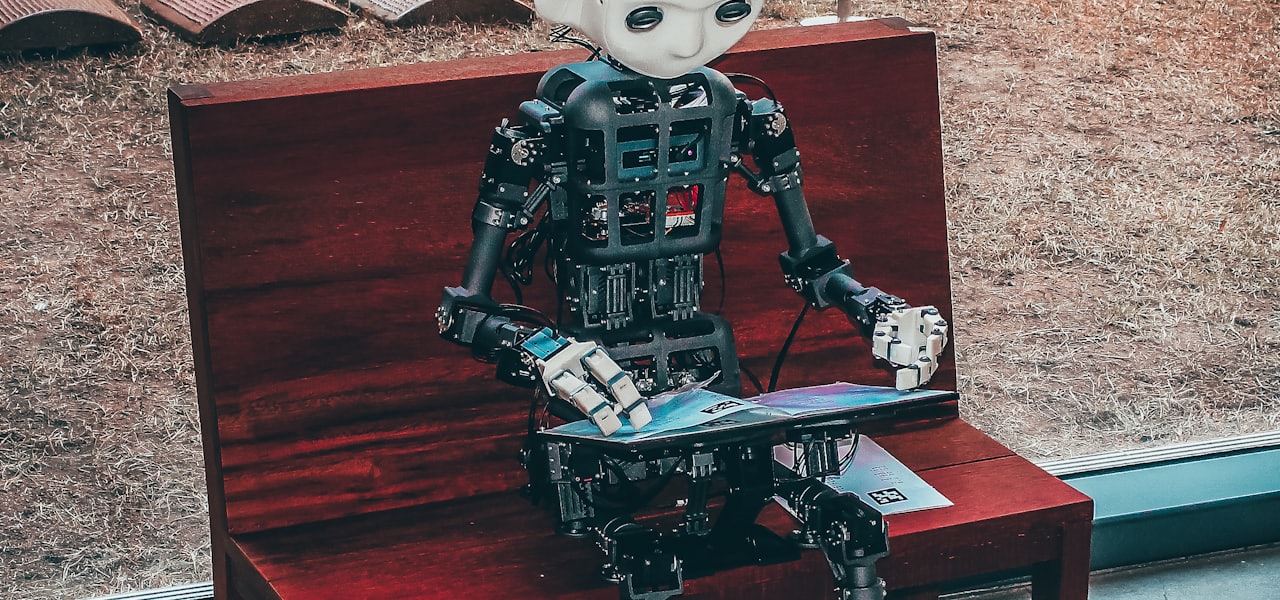
Eyes of Things (EoT) is the name of a project funded by the European Union’s Horizon 2020 Research and Innovation Programme under grant agreement number 643924. The purpose of the project, which is funded under the Smart Cyber-physical systems topic, is to develop a generic hardware-software platform for embedded, efficient (i.e. battery-operated, wearable, mobile), computer vision, including deep learning inference. On November 29, 2018, the European Space Agency announced that it was testing the suitability of the device for space applications in advance of a flight in a Cubesat. == Motivation == EoT is based on the following tenets: Future embedded systems will have more intelligence and cognitive functionality. Vision is paramount to such intelligent capacity Unlike other sensors, vision requires intensive processing. Power consumption must be optimized if vision is to be used in mobile and wearable applications Cloud processing of edge-captured images is not sustainable. The sheer amount of visual data generated cannot be transferred to the cloud. Bandwidth is not sufficient and cloud servers cannot cope with it. == Partners == VISILAB group at University of Castilla–La Mancha (Coordinator) Movidius Awaiba Thales Security Solutions & Systems DFKI Fluxguide Evercam nVISO == Awards == 2019 Electronic Component and Systems Innovation Award by the European Commission 2018 HiPEAC Tech Transfer Award 2018 EC Innovation Radar - highlighting excellent innovations Award 2018 Internet of Things (IoT) Technology Research Award Pilot by Google 2016 Semifinalist "THE VISION SHOW STARTUP COMPETITION", Global Association for Vision Information, Boston US
House of Suns
House of Suns is a 2008 science fiction novel by Welsh author Alastair Reynolds. The novel was shortlisted for the 2009 Arthur C. Clarke Award. == Setting == Approximately six million years in the future, humanity has spread throughout the Milky Way galaxy, which appears devoid of any other organic sentient life. The galaxy is populated by numerous civilizations of humans and posthumans of widely varying levels of development. A civilization of sentient robots known as the Machine People coexists peacefully with humanity. Technologies of the era include anti-gravity, inertia damping, force fields, stellar engineering, and stasis fields. Also of note is the "Absence"—the mysterious disappearance of the Andromeda Galaxy. Large-scale human civilizations almost invariably seem to collapse and disappear within a few millennia (a phenomenon referred to as "turnover"), the limits of sub-lightspeed travel making it too difficult to hold interstellar empires together. Consequently, the most powerful entities in the galaxy are the "Lines"—familial organizations made of cloned "shatterlings". The Lines do not inhabit planets, but instead travel through space, holding reunions after they have performed a "circuit" of the galaxy; something that takes about 200,000 years. House of Suns concerns the Gentian Line, also known as the House of Flowers, composed of Abigail Gentian and her 999 clones (or "shatterlings"), male and female: exactly which of the 1,000 shatterlings is the original Abigail Gentian is unknown. The clones and Abigail travel the Milky Way Galaxy, helping young civilizations, collecting knowledge, and experiencing what the universe has to offer. Members of the Gentian Line are named after flowering plants. == Synopsis == The novel is divided into eight parts, with the first chapter of each part taking the form of a narrative flashback to Abigail Gentian's early life (six million years earlier, in the 31st century), before the cloning and the creation of the Gentian Line. Each subsequent chapter is narrated from the first-person perspective of two shatterlings named Campion and Purslane, alternating between them each chapter. Campion and Purslane are in a relationship, which is frowned upon, even punishable, by the Line. The primary storyline begins as Campion and Purslane are roughly fifty years late to the 32nd Gentian reunion. They take a detour to contact a posthuman known as ‘Ateshga’ in hopes of getting a replacement ship for Campion because his is getting old (several million years old). After being tricked by Ateshga, Campion and Purslane manage to turn the tables on him and leave his planet with a being he had been keeping captive, a golden robot called Hesperus. Hesperus is a member of the "Machine People", an advanced civilization of robots, and supposedly the only non-human sentient society in existence. The two shatterlings hope that the rescue of Hesperus will let them off the hook for their lateness, as returning him to his people (who will be at the reunion as guests of other shatterlings) will put the Gentian Line on good terms with the Machine People. However, before reaching the reunion world, Campion and Purslane encounter an emergency distress signal from Fescue, another Gentian shatterling. There was a vicious attack on the reunion world; an ambush in which the majority of the Gentian Line was wiped out. The identity of the responsible party is unknown, but the attackers used the supposedly long-vanished 'Homunculus' weapons – monstrous spacetime-bending weapons that were created ages ago, but were ordered to be destroyed by another Line. Despite Fescue's warning, Campion and Purslane approach the reunion system to look for survivors. They manage to find the remains of a ship with several Gentian members still alive, and rescue them and the four enemy prisoners they had captured. Hesperus, however, is gravely injured in the process by remaining ambushers. The group escapes and make their way to the Gentian backup meeting planet, Neume, in the hope of re-grouping with any other Gentians who may have survived the ambush. Upon reaching Neume, Campion, Purslane and the other shatterlings they rescued are greeted by the few Gentian survivors of the ambush (numbering only in the forties, compared to the hundreds that existed before the ambush). They also meet two members of the Machine People: Cadence and Cascade, guests of another shatterling. During the next few days, the interrogation of the prisoners commences. Another Gentian, Cyphel, is mysteriously murdered, which fuels the Line's concerns that there is a traitor among them. As a way of punishing Campion for transgressions against the Line, Purslane is made to give up her ship, the Silver Wings of Morning (one of the fastest and most powerful in the Line) to Cadence and Cascade, ostensibly so they can return to the Machine People with news of the ambush, in a bid to gain the Line some assistance. Hesperus, still critically wounded following the rescue of the survivors, is taken to the Neumean "Spirit of the Air", an ancient posthuman machine-intelligence, in the hopes that it will fix him. The Spirit takes Hesperus away and returns him some time later, though apparently still not functioning. The robots Cadence and Cascade make preparations to leave on Purslane's ship. They agree to take him aboard and return him to their people, who they promise may be able to help Hesperus. Purslane accompanies them to her ship, where she must be physically present to give the ship order to transfer control over to the robots. On their way to the bridge, Hesperus suddenly springs to life, grabbing Purslane and hiding her while Cadence and Cascade are whisked along to the bridge. Hersperus quickly explains that Cadence and Cascade are actually planning on hijacking the ship. Bewildered by this sudden change of events, Purslane delays in acting, not sure if she should trust Hesperus, before deciding to ask the ship to detain and eject the robots in the bridge. By then, though, it is too late. Cadence and Cascade hack into the ship's computer, taking it over, and take off from Neume with Hesperus and Purslane still aboard. Campion and several other shatterlings immediately launch a pursuit. Together Hesperus and Purslane find a hideout in a smaller ship in the hold of the Silver Wings of Morning. Using information gained from the other two robots and his own memories, Hesperus (who is now an amalgamation of both Hesperus and the Spirit of the Air) has pieced together what is going on: Cadence and Cascade have discovered that the Line was involved in the accidental extermination of a forgotten earlier race of machine people, dubbed the "First Machines". The Commonality (a confederation of the various Lines), horrified and ashamed of this pointless genocide, erased all knowledge of the event from historical records and their own memories. Unfortunately, Campion, in a previous circuit, unwittingly uncovered information pertaining to the extermination. Hesperus believes that the ambush at the reunion was seeking to destroy this evidence before it could spread, carried out by a shadow Line known as the "House of Suns", tasked with maintaining the conspiracy. Cadence and Cascade, on the other hand, are racing for a wormhole which leads to the Andromeda Galaxy, to where the few survivors of the First Machines are revealed to have retreated. They plan to release the First Machines back into the Milky Way, thus effecting a revenge against the Commonality for the genocide. As Campion and the shatterlings are pursuing Purslane's hijacked ship, transmissions from Neume confirm that a shatterling within their midst, Galingale, is the traitor and a secret member of the House of Suns. The shatterlings open fire on both Galingale's and Purslane's ships, and while they manage to capture Galingale, they are unable to stop Purslane's ship. Unable to get within weapons range, Campion pursues Purslane's ship for sixty thousand light years, during which time he and Purslane, on their separate ships, are suspended in "abeyance", a form of temporal slowdown or stasis. Despite efforts to stop the hijacked ship from reaching the concealed wormhole by local civilisations, the robot Cascade succeeds in opening the "stardam" enclosing the wormhole and travelling through it to the Andromeda Galaxy. On board Silver Wings of Morning, Hesperus reveals to Campion that while he managed to destroy Cadence before they could leave the Neume star system, Cascade survived and he and Cascade had engaged in a marathon battle, several thousand years. Hesperus was ultimately victorious, but Cascade has fused the ship controls before his defeat and they are past the point of no return. Campion, now the only shatterling still in pursuit, enters the wormhole after them and emerges in the Andromeda Galaxy, a place apparently devoid of all sentient life. In his search for Purslane and her ship, he travels to a star enca