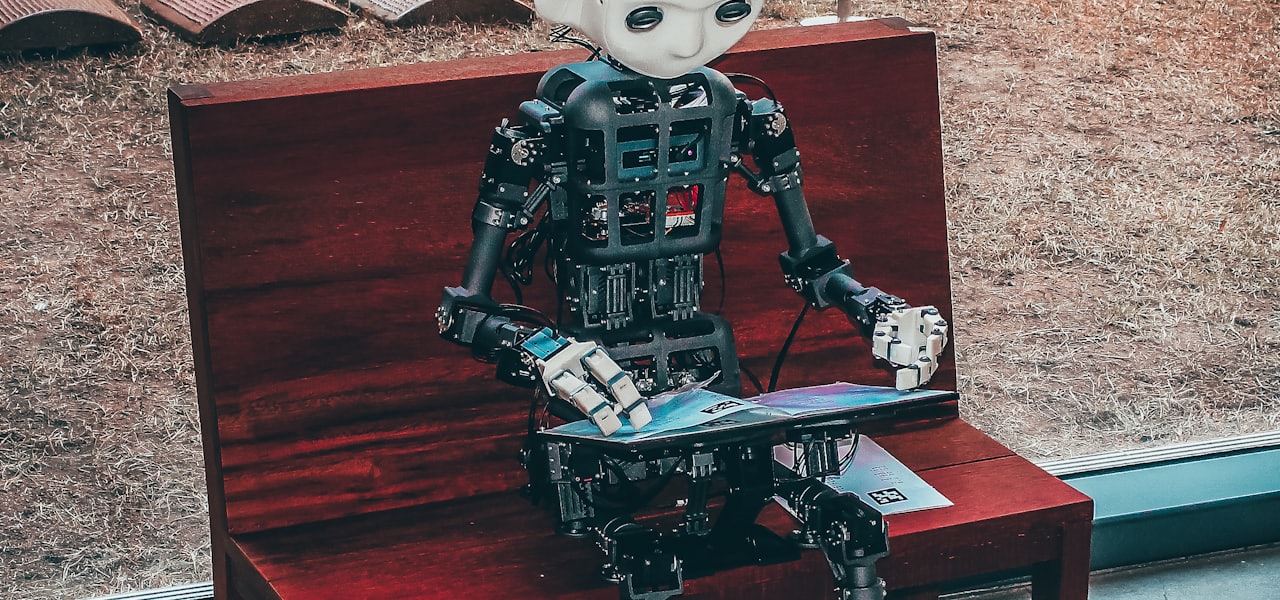
The Multi Autonomous Ground-robotic International Challenge (MAGIC) is a 1.6 million dollar prize competition for autonomous mobile robots funded by TARDEC and the DSTO, the primary research organizations for Tank and Defense research in the United States and Australia respectively. The goal of the competition is to create multi-vehicle robotic teams that can execute an intelligence, surveillance and reconnaissance mission in a dynamic urban environment. The challenge required competitors to map a 500 m x 500 m challenge area in under 3.5 hours and to correctly locate, classify and recognise all simulated threats. The challenge event was conducted in Adelaide, Australia, during November 2010. == Competitors == Initially 12 teams were selected for the competition in November 2009, of which 10 teams received funding. These included: MAGICian – Adelaide/Perth, Australia (UWA, ECU, Flinders, Thales) Strategic Engineering – Adelaide, Australia (U. Adelaide) Northern Hunters – Canada (Royal Military College of Canada) Chiba Team – Japan (Chiba University) Cappadocia – Ankara, Turkey (ASELSAN, Ohio State University) RASR – Gaithersburg, Md. (Robotics Research, LLC; QinetiQ; Embry-Riddle Aeronautical University) Team Cornell – US (Cornell University) Team Michigan – Ann Arbor, Mich. (University of Michigan) Virginia Tech – US (Virginia Tech) University of Pennsylvania – Philadelphia (University of Pennsylvania) Numinence – Brisbane, Australia (Numinence Pty Ltd, La Trobe University) UNSW – Sydney, Australia (UNSW) The first downselection trial required teams to map an indoor area and outdoor area, and to demonstrate distributing and handing over tasks between robots. During the first downselection trial, the top six teams were selected: Cappadocia – Ankara, Turkey MAGICian – Adelaide/Perth, Australia RASR – Gaithersburg, Md. Team Michigan – Ann Arbor, Mich. University of Pennsylvania – Philadelphia Chiba Team – Japan Before the finals were held, Chiba Team withdrew from the competition, leaving five competitors. == Event == Ultimately the overall goal of fully autonomous operations without human intervention was not achieved, however, the Secretary for Defence stated "The competing vehicles demonstrated new advances in robotics technology, which are very promising for their potential deployment in combat zones where they can replace our troops in carrying out life-threatening tasks" and considered the competition a success. == Results == The official results of the competition were: First – Team Michigan ($750,000 prize) Second – University of Pennsylvania ($250,000 prize) Third – RASR ($100,000 prize) Fourth – MAGICian & Cappadocia The "Old Ram Shed Challenge" was a single-day competition held after the completion of MAGIC. It was smaller in scale, allowing all of the teams to demonstrate their systems during a single day. The University of Pennsylvania won this challenge, having found a greater number of the target objects than the other teams. == Technology == Key technology used by all teams was computer vision, sensor fusion, human-robot interaction, and simultaneous localization and mapping (SLAM). Team Michigan, a collaboration between the University of Michigan's APRIL Lab and Soar Technology, Inc., had the largest fleet of 14 robots, developed their own Inertial Measurement Unit, and created their skid steer robot chassis out of Baltic birch plywood. Additionally, they had minimal reliance on GPS and used bandwidth limited 900 MHz radios for all telemetry, imaging, and status communications between all robots and the ground station. The code was written primarily in Java and each robot was equipped with an actuated 2D LIDAR, along with a unique 2D barcode for inter-robot recognition. The University of Pennsylvania team consisted of only four members. All code was written using Matlab. The robots were equipped with omnidirectional vision. RASR used the Foster-Miller TALON vehicle. MAGICian used the WAMbot robots developed by The University of Western Australia, Edith Cowan University and Thales Australia. Code was written in C++ and Java. The robots were equipped with SICK laser scanners. See the September/October 2012 special issue of the Journal of Field Robotics for contest highlights, technical approaches taken by several of the teams, and an explanation of the evaluation metrics used by organizers.
Latent semantic mapping
Latent semantic mapping (LSM) is a data-driven framework to model globally meaningful relationships implicit in large volumes of (often textual) data. It is a generalization of latent semantic analysis. In information retrieval, LSA enables retrieval on the basis of conceptual content, instead of merely matching words between queries and documents. LSM was derived from earlier work on latent semantic analysis. There are 3 main characteristics of latent semantic analysis: Discrete entities, usually in the form of words and documents, are mapped onto continuous vectors, the mapping involves a form of global correlation pattern, and dimensionality reduction is an important aspect of the analysis process. These constitute generic properties, and have been identified as potentially useful in a variety of different contexts. This usefulness has encouraged great interest in LSM. The intended product of latent semantic mapping, is a data-driven framework for modeling relationships in large volumes of data. Mac OS X v10.5 and later includes a framework implementing latent semantic mapping.
Blocking of Twitter in Nigeria
Twitter was blocked in Nigeria from 5 June 2021 to 13 January 2022. The government imposed a ban on the social network after it deleted tweets made by, and temporarily suspended, the Nigerian president Muhammadu Buhari, warning the southeastern people of Nigeria, predominantly Igbo people, of a potential repeat of the 1967 Nigerian Civil War due to the ongoing insurgency in Southeastern Nigeria. The Nigerian government claimed that the deletion of the president's tweets factored into their decision, but it was ultimately based on "a litany of problems with the social media platform in Nigeria, where misinformation and fake news spread through it have had real world violent consequences", citing the persistent use of the platform for activities that are capable of undermining Nigeria's corporate existence. In January 2022, Nigeria lifted its blocking of Twitter after the platform agreed to establish a legal entity within the country sometime in the first quarter of 2022. == Background == On 1 June 2021, Nigerian President Muhammadu Buhari posted a tweet threatening a crackdown on regional separatists "in the language they understand". The next day, Twitter deleted the tweet, claiming it was in violation of Twitter rules, but gave no further details. Nigeria's Information Minister Lai Mohammed said that Twitter's actions were part of an unfair double standard, as Twitter had not banned incitement tweets from other groups. During the Nigerian Civil War a majority of deaths resulted from the blockade of Biafra which caused the deaths of millions of civilians from starvation, a fact that was not alluded to in the tweet. The Nigerian government has long held concerns over the use of Twitter in the country. The ongoing local End SARS protest began on Twitter and got amplified in 2020 when it had 48 million tweets in ten days. Buhari's government floated the idea of social media regulation on different occasions prior to banning Twitter. Attempts to pass an anti-social media bill in the past have failed majorly due to massive outcry on Twitter. Days before the ban, the country's minister of information called Twitter's activities in Nigeria suspicious, citing its influence on the End SARS protests. == Aftermath == Three days after Twitter was suspended, it was reported that the move had cost the country over 6 billion naira and would also contribute to the worsening unemployment in the country. ExpressVPN reported an over 200 percent increase in web traffic and searches for VPN spiked across the country. In response, Nigeria's Minister of Justice and Attorney General of the Federation Abubakar Malami at first openly threatened to prosecute citizens who bypass the ban using a VPN but then denied saying so after a screenshot of a Twitter deactivation notification he shared on Facebook showed a VPN logo. Nigeria's cultural minister Lai Mohammed stated the ban would be lifted once Twitter submitted to locally licensing, registration and conditions. "It will be licensed by the broadcasting commission, and must agree not to allow its platform to be used by those who are promoting activities that are inimical to the corporate existence of Nigeria." In late June 2021, Twitter announced it would enter talks with the Nigerian government over the platform's suspension. The talks began in July 2021. On 15 September 2021, Mohammed said the Nigerian government will lift the ban on Twitter in a "few days." The Minister said Twitter gave a progress report of their talks with them, adding that it has been productive and quite respectful. On 1 October 2021, President Muhammadu Buhari in his Independence Day broadcast said Twitter must meet the Nigerian government's five conditions before the suspension of the social media platform will be lifted. The conditions are: Respect for national security and cohesion; registration, physical presence and representation in Nigeria; fair taxation; dispute resolution; local content. == Reactions == The ban was condemned by Amnesty International, the British, Canadian and Swedish diplomatic missions to Nigeria, as well as the United States and the European Union in a joint statement. Two domestic organizations, the Socio-Economic Rights and Accountability Project (SERAP) and the Nigerian Bar Association, indicated intent to challenge the ban in court. Twitter itself called the ban "deeply concerning". Former U.S. President Donald Trump, who was permanently suspended from Twitter following the United States Capitol attack in January, praised the ban, stating "Congratulations to the country of Nigeria, who just banned Twitter because they banned their President", and also called on other countries to ban Twitter and Facebook due to "not allowing free and open speech." == Lifting of the ban == On 12 January 2022, the Nigerian Government lifted the ban after Twitter agreed to pay an "applicable tax" and establish "a legal entity in Nigeria during the first quarter of 2022".
Content reference identifier
A content reference identifier or CRID is a concept from the standardization work done by the TV-Anytime forum. It is or closely matches the concept of the Uniform Resource Locator, or URL, as used on the World-Wide Web: A unit of content, in a broadcast stream, can be referred to by its globally unique CRID in the same way that a webpage can be referred to by its globally unique URL on the web. The concept of CRID permits referencing contents unambiguously, regardless of their location, i.e., without knowing specific broadcast information (time, date and channel) or how to obtain them through a network, for instance, by means of a streaming service or by downloading a file from an Internet server. The receiver must be capable of resolving these unambiguous references, i.e. of translating them into specific data that will allow it to obtain the location of that content in order to acquire it. This makes it possible for recording processes to take place without knowing that information, and even without knowing beforehand the duration of the content to be recorded: a complete series by a simple click, a program that has not been scheduled yet, a set of programs grouped by a specific criterion... This framework allows for the separation between the reference to a given content (the CRID) and the necessary information to acquire it, which is called a “locator”. Each CRID may lead to one or more locators which will represent different copies of the same content. They may be identical copies broadcast in different channels or dates, or cost different prices. They may also be distinct copies with different technical parameters such as format or quality. It may also be the case that the resolution process of a CRID provides another CRID as a result (for example, its reference in a different network, where it has an alternative identifier assigned by a different operator) or a set of CRIDs (for instance, if the original CRID represents a TV series, in which case the resolution process would result in the list of CRIDs representing each episode). From the above it can be concluded that provided that a given content can belong to many groups (each possibly defined by distinctive qualities), it is possible that many CRIDs carry the same content. That is, several CRIDs may be resolved into the same locator. A CRID is not exactly a universal, unique and exclusive identifier for a given content. It is closely related to the authority that creates it, to the resolution service provider, and to the content provider in such a way that the same content may have different CRIDs depending on the field in which they are used (for example, a different one for each television operator that has the rights to broadcast the content). == Format == A CRID is specified much like URLs. In fact, a CRID is a so-called URI. Typically, the content creator, the broadcaster or a third party will use their DNS-names in a combination with a product-specific name to create globally unique CRIDs. That is, the syntax of a CRID is: crid://authority/data The authority field represents the entity that created the CRID and its format is that of a DNS name. The data field represents a string of characters that will unambiguously identify the content within the authority scope (it is a string of characters assigned by the authority itself). As an example, let's assume that BBC wanted to make a CRID for (all the programs of) the Olympics in China. It may have looked something like this crid://bbc.co.uk/olympics/2008/ This would be a group CRID, that is, a CRID representing a group of contents. Then, to refer to a specific event – such as the women's shot-put final – they could have used the following inside their metadata. crid://bbc.co.uk/olympics/2008/final/shotput/women Currently, four types of CRIDs are playing a major role in some unidirectional television networks: programme CRID, series CRID, group CRID, and recommendation CRID. One of the most important applications of CRIDs is the so-called series link recording function (SL) of modern digital video recorders (DVR, PVR). In turn, a locator is a string of characters that contains all the necessary information for a receiver to find and acquire a given content, whether it is received through a transport stream, located in local storage, downloaded as a file from an Internet server, or through a streaming service. For example, a DVB locator will include all the necessary parameters to identify a specific content within a transport stream: network, transport stream, service, table and/or event identifiers. The locators' format, as established in TV-Anytime, is quite generic and simple, and corresponds to: [transport-mechanism]:[specific-data] The first part of the locator's format (the transport mechanism) must be a string of characters that is unique for each mechanism (transport stream, local file, HTTP Internet access...). The second part must be unambiguous only within the scope of a given transport mechanism and will be standardized by the organism in charge of the regulation of the mechanism itself. For instance, a DVB locator to identify a content within the transport stream of networks that follow this standard would be: dvb://112.4a2.5ec;2d22~20121212T220000Z—PT01H30M which would indicate a content (identified by the string “2d22”) that airs on a channel available on a DVB network identified by the address “112.4a2.5ec” (network “112”, transport stream “4a2” and service “5ec”), on 12 December 2012 at 10 p.m. and with a duration of 90 minutes. == The location resolution process == The location resolution process is the procedure by which, starting from the CRID of a given content, one or several locators of that content are obtained. Resolving a CRID can be a direct process, which leads immediately to one or many locators, or it may also happen that in the first place one or many intermediate CRIDs are returned, which must undergo the same procedure to finally obtain one or several locators. This procedure involves some information elements, among which we find two structures named resolving authority record (RAR) and ContentReferencingTable, respectively. Consulting them repeatedly will take the receiver from a CRID to one or many locators that will allow it to acquire the content. The RAR table The RAR table is one or many data structures that provide the receiver, for each authority that submits CRIDs, information on the corresponding resolution service provider. Among other things, it informs about which mechanism is used to provide information to resolve the CRIDs from each authority. That is, one or many RAR records must exist for each authority that indicate the receiver where it has to go to resolve the CRIDs of that particular authority. For example, in the record of the figure (expressed by means of a XML structure, according to the XML Schema defined in the TV-Anytime) there is an authority called “tve.es”, whose resolution service provider is the entity “rtve.es”, available on the URL "http://tva.rtve.es/locres/tve", which means there is resolution information in that URL. These RAR records will have reached the receiver in an indefinite form, unimportant for the TV-Anytime specification, which will depend on the specific transport mechanism of the network to which the receiver is connected. Each family of standards that regulates distribution networks (DVB, ATSC, ISDB, IPTV...) will have previously defined such procedure, which will be used by devices certified according to those standards. The ContentReferencingTable table The second structure involved in the location resolution process is a proper resolution table which, given a content's CRID, returns one or several locators that enable the receiver to access an instance of that content, or one or many CRIDs that allow it to move forward in the resolution process. The figure shows an example of this second structure, an XML document according to the specifications of the XML Schema defined in TV-Anytime. In it, several sections are included (
Media Auxiliary Memory
Media Auxiliary Memory or Medium Auxiliary Memory (MAM) refers to a chip embedded into a digital media device (usually a tape cartridge) that stores a small amount of data or metadata that a computer can read without having to read the actual tape. MAMs can be used by the tape driver to increase efficiency, or by custom software to store & retrieve custom data. Some examples of MAM's are Cartridge Memory (HP/Seagate/IBM LTO) and MIC (Sony AIT).
Niki.ai
Niki was an artificial intelligence company headquartered in Bangalore, Karnataka. It was founded in May 2015 by IIT Kharagpur graduates Sachin Jaiswal, Keshav Prawasi, Shishir Modi, and Nitin Babel. The Niki android app was launched for a limited beta in June 2015, then released for public during YourStory's TechSparks 2015, and is a Tech30 company. The company raised an undisclosed amount in seed funding from Unilazer Ventures, a Mumbai-based VC firm founded by Ronnie Screwvala, in October 2015. This was followed by another seed funding round by Ratan Tata in May 2016. The company then raised US$2 million in Series A round of funding from SAP.iO, existing investors and some US and German-based investors, among others. Niki.ai shut down in October 2021 as per media reports. Website not working. == Product == The product is an artificial intelligence-powered chatbot which works as an intelligent personal assistant, named Niki. Leveraging natural language processing and machine learning, Niki presents a chat-based natural language user interface to the users where they can interact with Niki in their natural language. Niki understands how users chat in India, deciphers the words, in the context of product/services that they would like to purchase, and comes up with apt recommendations. Initially, it was only available on the Android platform as a mobile app. The company has expanded its operations to the Facebook Messenger and Apple iOS platforms. The company aims to soon be present on more messaging platforms like Slack and WhatsApp. The company currently provides 20+ services to over 2 million consumers, covering a wide spectrum ranging from utility services like mobile recharge, bill payments, travel services like cabs, buses, hotels and entertainment services like movies and events. Services such as flights and healthcare are also planned. == Partnerships == In September 2017, Infosys Finacle joined with Niki.ai to provide chat-based service to banking customers. In August 2017, Niki partnered with LazyPay to enable a 'buy now, pay later' feature for its users.
Futel
Futel is a public arts organization in Portland, Oregon dedicated to preserving and maintaining public telephone hardware and offering free phone and basic information services. Futel was founded by Karl Anderson, a former software engineer, and Elijah St. Clair. == Technology == Karl Anderson stated that one motivation for the project was to explore the idea of urban furniture. Other reasons were to preserve an important part of hacker history, and to salvage and re-use manufactured items at the end of their lifecycle. The original Futel phones were set up in Portland, Oregon. The organization cleans and repurposes old public payphones which are often salvaged from Craigslist or scrappers. Using interface boxes, they are converted into VoIP phones which are made available publicly, with no cost for phone calls. Anderson has said the service runs on "Asterisk and OpenVPN and a lot of scripts." The payphones operate using publicly-available internet connections. The phones have automated phone trees and users can make a call to local social services, to a weather forecast line, or access local transit information. Volunteers act as telephone operators, offering information about the Futel service, or are available for conversation. Users using Futel's phones may also access voicemail boxes. The system has a "wildcard line" where people can listen to samples of audio left on the main voicemail line along with commentary from Anderson and others. == Network == In February 2021, there were 10 Futel phones in Portland and 3 in other cities. Phones were set up in Detroit and Ypsilanti, Michigan, and Long Beach, Washington. The organization has provided free phone service for a Portland-area homeless encampment after receiving funding from the Awesome Foundation. In 2019 the organization reported their phones being used to make 12,000 phone calls. Futel also said their usage went up and not down during the first year of the COVID-19 pandemic when they outfitted their phone kiosks with handwashing stations and used volunteers to keep the phones clean. The project is funded is primarily through grants and is staffed with volunteers. The project has inspired others such as the PhilTel project in Philadelphia and the RandTel project in Randolph, Vermont. Futel publishes a zine called Party Line.