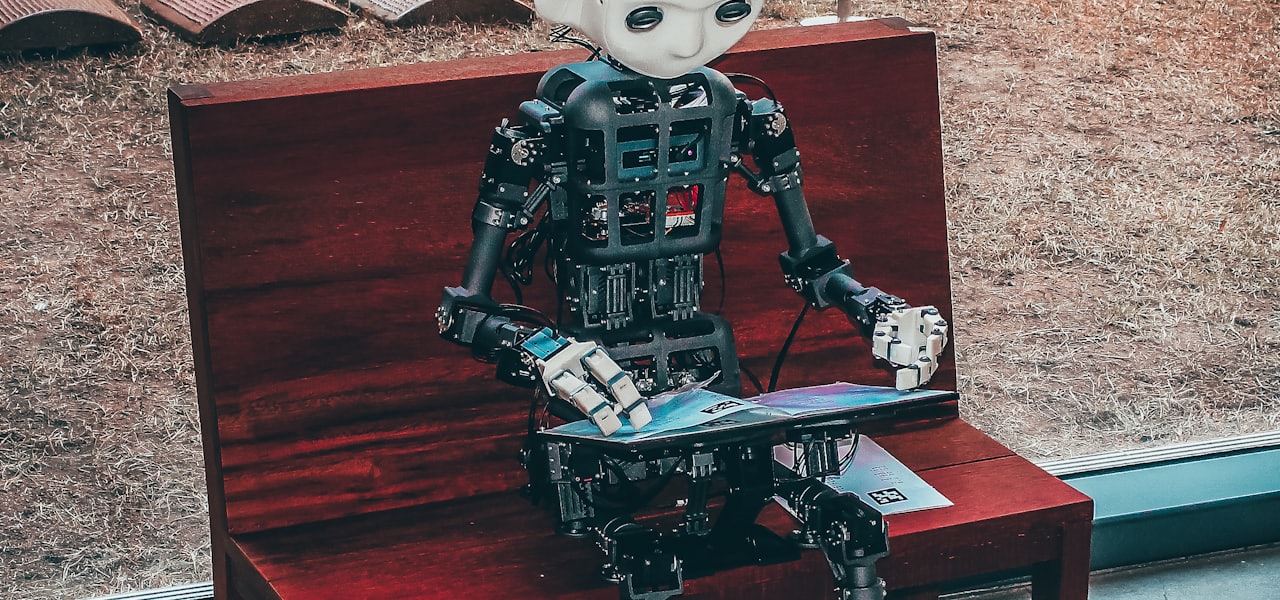
Case-based reasoning (CBR), broadly construed, is the process of solving new problems based on the solutions of similar past problems. In everyday life, an auto mechanic who fixes an engine by recalling another car that exhibited similar symptoms is using case-based reasoning. A lawyer who advocates a particular outcome in a trial based on legal precedents or a judge who creates case law is using case-based reasoning. So, too, an engineer copying working elements of nature (practicing biomimicry) is treating nature as a database of solutions to problems. Case-based reasoning is a prominent type of analogy solution making. It has been argued that case-based reasoning is not only a powerful method for computer reasoning, but also a pervasive behavior in everyday human problem solving; or, more radically, that all reasoning is based on past cases personally experienced. This view is related to prototype theory, which is most deeply explored in cognitive science. == Process == Case-based reasoning has been formalized for purposes of computer reasoning as a four-step process: Retrieve: Given a target problem, retrieve cases relevant to solving it from memory. A case consists of a problem, its solution, and, typically, annotations about how the solution was derived. For example, suppose Fred wants to prepare blueberry pancakes. Being a novice cook, the most relevant experience he can recall is one in which he successfully made plain pancakes. The procedure he followed for making the plain pancakes, together with justifications for decisions made along the way, constitutes Fred's retrieved case. Reuse: Map the solution from the previous case to the target problem. This may involve adapting the solution as needed to fit the new situation. In the pancake example, Fred must adapt his retrieved solution to include the addition of blueberries. Revise: Having mapped the previous solution to the target situation, test the new solution in the real world (or a simulation) and, if necessary, revise. Suppose Fred adapted his pancake solution by adding blueberries to the batter. After mixing, he discovers that the batter has turned blue – an undesired effect. This suggests the following revision: delay the addition of blueberries until after the batter has been ladled into the pan. Retain: After the solution has been successfully adapted to the target problem, store the resulting experience as a new case in memory. Fred, accordingly, records his new-found procedure for making blueberry pancakes, thereby enriching his set of stored experiences, and better preparing him for future pancake-making demands. == Comparison to other methods == At first glance, CBR may seem similar to the rule induction algorithms of machine learning. Like a rule-induction algorithm, CBR starts with a set of cases or training examples; it forms generalizations of these examples, albeit implicit ones, by identifying commonalities between a retrieved case and the target problem. If for instance a procedure for plain pancakes is mapped to blueberry pancakes, a decision is made to use the same basic batter and frying method, thus implicitly generalizing the set of situations under which the batter and frying method can be used. The key difference, however, between the implicit generalization in CBR and the generalization in rule induction lies in when the generalization is made. A rule-induction algorithm draws its generalizations from a set of training examples before the target problem is even known; that is, it performs eager generalization. For instance, if a rule-induction algorithm were given recipes for plain pancakes, Dutch apple pancakes, and banana pancakes as its training examples, it would have to derive, at training time, a set of general rules for making all types of pancakes. It would not be until testing time that it would be given, say, the task of cooking blueberry pancakes. The difficulty for the rule-induction algorithm is in anticipating the different directions in which it should attempt to generalize its training examples. This is in contrast to CBR, which delays (implicit) generalization of its cases until testing time – a strategy of lazy generalization. In the pancake example, CBR has already been given the target problem of cooking blueberry pancakes; thus it can generalize its cases exactly as needed to cover this situation. CBR therefore tends to be a good approach for rich, complex domains in which there are myriad ways to generalize a case. In law, there is often explicit delegation of CBR to courts, recognizing the limits of rule based reasons: limiting delay, limited knowledge of future context, limit of negotiated agreement, etc. While CBR in law and cognitively inspired CBR have long been associated, the former is more clearly an interpolation of rule based reasoning, and judgment, while the latter is more closely tied to recall and process adaptation. The difference is clear in their attitude toward error and appellate review. Another name for case-based reasoning in problem solving is symptomatic strategies. It does require à priori domain knowledge that is gleaned from past experience which established connections between symptoms and causes. This knowledge is referred to as shallow, compiled, evidential, history-based as well as case-based knowledge. This is the strategy most associated with diagnosis by experts. Diagnosis of a problem transpires as a rapid recognition process in which symptoms evoke appropriate situation categories. An expert knows the cause by virtue of having previously encountered similar cases. Case-based reasoning is the most powerful strategy, and that used most commonly. However, the strategy won't work independently with truly novel problems, or where deeper understanding of whatever is taking place is sought. An alternative approach to problem solving is the topographic strategy which falls into the category of deep reasoning. With deep reasoning, in-depth knowledge of a system is used. Topography in this context means a description or an analysis of a structured entity, showing the relations among its elements. Also known as reasoning from first principles, deep reasoning is applied to novel faults when experience-based approaches aren't viable. The topographic strategy is therefore linked to à priori domain knowledge that is developed from a more a fundamental understanding of a system, possibly using first-principles knowledge. Such knowledge is referred to as deep, causal or model-based knowledge. Hoc and Carlier noted that symptomatic approaches may need to be supported by topographic approaches because symptoms can be defined in diverse terms. The converse is also true – shallow reasoning can be used abductively to generate causal hypotheses, and deductively to evaluate those hypotheses, in a topographical search. == Criticism == Critics of CBR argue that it is an approach that accepts anecdotal evidence as its main operating principle. Without statistically relevant data for backing and implicit generalization, there is no guarantee that the generalization is correct. However, all inductive reasoning where data is too scarce for statistical relevance is inherently based on anecdotal evidence. == History == CBR traces its roots to the work of Roger Schank and his students at Yale University in the early 1980s. Schank's model of dynamic memory was the basis for the earliest CBR systems: Janet Kolodner's CYRUS and Michael Lebowitz's IPP. Other schools of CBR and closely allied fields emerged in the 1980s, which directed at topics such as legal reasoning, memory-based reasoning (a way of reasoning from examples on massively parallel machines), and combinations of CBR with other reasoning methods. In the 1990s, interest in CBR grew internationally, as evidenced by the establishment of an International Conference on Case-Based Reasoning in 1995, as well as European, German, British, Italian, and other CBR workshops. CBR technology has resulted in the deployment of a number of successful systems, the earliest being Lockheed's CLAVIER, a system for laying out composite parts to be baked in an industrial convection oven. CBR has been used extensively in applications such as the Compaq SMART system and has found a major application area in the health sciences, as well as in structural safety management. There is recent work that develops CBR within a statistical framework and formalizes case-based inference as a specific type of probabilistic inference. Thus, it becomes possible to produce case-based predictions equipped with a certain level of confidence. One description of the difference between CBR and induction from instances is that statistical inference aims to find what tends to make cases similar while CBR aims to encode what suffices to claim similarly.
Standard test image
A standard test image is a digital image file used across different institutions to test image processing and image compression algorithms. By using the same standard test images, different labs are able to compare results, both visually and quantitatively. The images are in many cases chosen to represent natural or typical images that a class of processing techniques would need to deal with. Other test images are chosen because they present a range of challenges to image reconstruction algorithms, such as the reproduction of fine detail and textures, sharp transitions and edges, and uniform regions. == Historical origins == Test images as transmission system calibration material probably date back to the original Paris to Lyon pantelegraph link. Analogue fax equipment (and photographic equipment for the printing trade) were the largest user groups of the standardized image for calibration technology until the coming of television and digital image transmission systems. == Common test image resolutions == The standard resolution of the images is usually 512×512 or 720×576. Most of these images are available as TIFF files from the University of Southern California's Signal and Image Processing Institute. Kodak has released 768×512 images, available as PNGs, that was originally on Photo CD with higher resolution, that are widely used for comparing image compression techniques.
List of performance analysis tools
This is a list of performance analysis tools for use in software development. == General purpose, language independent == The following tools work based on log files that can be generated from various systems. time (Unix) - can be used to determine the run time of a program, separately counting user time vs. system time, and CPU time vs. clock time. timem (Unix) - can be used to determine the wall-clock time, CPU time, and CPU utilization similar to time (Unix) but supports numerous extensions. Supports reporting peak resident set size, major and minor page faults, priority and voluntary context switches via getrusage. Supports sampling procfs on supporting systems to report metrics such as page-based resident set size, virtual memory size, read-bytes, and write-bytes, etc. Supports collecting hardware counters when built with PAPI support. == Multiple languages == The following tools work for multiple languages or binaries. == C and C++ == Arm MAP, a performance profiler supporting Linux platforms. AppDynamics, an application performance management service for C/C++ applications via SDK. AQtime Pro, a performance profiler and memory allocation debugger that can be integrated into Microsoft Visual Studio, and Embarcadero RAD Studio, or can run as a stand-alone application. IBM Rational Purify was a memory debugger allowing performance analysis. Instruments (bundled with Xcode) is used to profile an executable's memory allocations, time usage, filesystem activity, GPU activity etc. Intel Parallel Studio contains Intel VTune Amplifier, which tunes both serial and parallel programs. It also includes Intel Advisor and Intel Inspector. Intel Advisor optimizes vectorization (use of SIMD instructions) and prototypes threading implementations. Intel Inspector detects and debugs races, deadlocks and memory errors. Parasoft Insure++ provides a graphical tool that displays and animates memory allocations in real time to expose memory blowout, fragmentation, overuse, bottlenecks and leaks. Visual Studio Team System Profiler, commercial profiler by Microsoft. == Java == inspectIT is an open-source application performance management (APM) service for monitoring and analyzing software applications, available under the Apache License, Version 2.0 (ALv2). JConsole is the profiler which comes with the Java Development Kit JProfiler JRockit Mission Control, a profiler with low overhead. Netbeans Profiler, a profiler integrated into the NetBeans IDE (internally uses jvisualvm profiler) Plumbr, Java application performance monitoring with automated root cause detection. Links memory leaks, GC inefficiency, slow database and external web service calls, locked threads, and other performance problems to the line in source code that causes them. OverOps, Continuous reliability for the modern software supply chain, automatically detect and deliver root cause automation for all errors. VisualVM is a visual tool integrating several commandline JDK tools and lightweight profiling capabilities. It is bundled with the Java Development Kit since version 6, update 7. == JavaScript == The Firefox web browser's developer tools contain a Performance tool, which gives insight into JavaScript performance of a website. Microsoft Visual Studio AJAX Profiling Extensions is a free profiling tool for JavaScript by Microsoft Research. == .NET == CLR Profiler is a free memory profiler provided by Microsoft for CLR applications. GlowCode is a performance and memory profiler for .NET applications using C# and other .NET languages. It identifies time-intensive functions and detects memory leaks and errors in native, managed and mixed Windows x64 and x86 applications. Visual Studio == PHP == BlackFire.io Dbg Xdebug is a PHP extension which provides debugging and profiling capabilities.
Nextcloud
Nextcloud is a modular workspace platform designed to provide teams and businesses with a comprehensive environment for digital collaboration. Beyond central data management, it integrates office suites like Collabora Online and EuroOffice office suites. for seamless, cooperative workflows. The platform features built-in tools for chat, videoconferencing, and a privacy-focused AI assistant capable of running entirely on local LLMs. Supported by a rich ecosystem of apps, it can be hosted in the cloud or on premises and can scale up to millions of users. It has been translated into over 100 languages. == Features == Nextcloud files are stored in conventional directory structures, accessible via WebDAV if necessary. A SQLite, MySQL/MariaDB or PostgreSQL database is required to provide additional functionality like permissions, shares, and comments. Nextcloud can synchronize with local clients running Windows (Windows 8.1 and above), macOS (10.14 or later), Linux and FreeBSD. Nextcloud permits user and group administration locally or via different backends like OpenID or LDAP. Content can be shared inside the system by defining granular read/write permissions between users and groups. Nextcloud users can create public URLs when sharing files. Logging of file-related actions, as well as disallowing access based on file access rules is also available. Security options like brute-force protection and multi-factor authentication using TOTP, WebAuthn, Oauth2, and OpenID Connect are available. Nextcloud has planned new features such as monitoring capabilities, full-text search and Kerberos authentication, as well as audio/video conferencing, expanded federation and smaller user interface improvements. == History == In April 2016 Frank Karlitschek and most core contributors left ownCloud Inc. These included some of ownCloud's staff according to sources near to the ownCloud community. Karlitschek and many of these contributors went on to fork ownCloud, creating Nextcloud. The fork was preceded by a blog post of Karlitschek announcing his departure and raising questions about the management of the ownCloud, its community, and priorities between growth, money, and sustainability. There have been no official statements about the reason for the fork. However, Karlitschek mentioned the fork several times in a talk at the 2018 FOSDEM conference and in two appearances on the FLOSS Weekly podcast, emphasizing cultural mismatch between open source developers and business oriented people not used to the open source community. On June 2, within 12 hours of the announcement of the fork, the American entity "ownCloud Inc." announced that it is shutting down with immediate effect, stating that "[...] main lenders in the US have cancelled our credit. Following American law, we are forced to close the doors of ownCloud, Inc. with immediate effect and terminate the contracts of 8 employees." ownCloud Inc. accused Karlitschek of poaching developers, while Nextcloud developers such as Arthur Schiwon stated that he "decided to quit because not everything in the ownCloud Inc. company world evolved as I imagined". ownCloud GmbH continued operations, secured financing from new investors and took over the business of ownCloud Inc. In April 2018 Informationstechnikzentrum Bund (ITZBund) reported Nextcloud won the tender for "Bundescloud" (Germany government cloud) project. In August 2019 it was announced that the governments of France, Sweden and the Netherlands would use Nextcloud for file transfer. In January 2020 Nextcloud 18 "Nextcloud Hub" was released. The major change was direct integration with an Office suite (OnlyOffice) and Nextcloud announced that their goal was to compete with Office 365 and Google Docs. A partnership with Ionos was revealed – its hosting location in Germany and compliance with GDPR should support the goal of data sovereignty. In spring 2020 remote work and web conferencing usage increased due to the COVID-19 pandemic and Nextcloud released version 19 with chat and videoconferencing Talk app integrated into the application core. Communication with an optional "high performance back-end" allows self-hosting of web conferences with more than 10 participants. Collabora Online was introduced as another integrated office suite. In August 2021 Nextcloud was chosen as a collaboration platform for European cloud software GAIA-X. In a September 2021 European Commission report it was mentioned as "the most widely deployed Open Source content collaboration platform" Following the 2025 United States tariffs against the European Union, fear of overreliance on US cloud providers such as Microsoft 365 and Google Workspace increased, with Nextcloud being one of the foremost contenders to replace them. Some governmental organisations including the European Data Protection Supervisor and the German state of Schleswig-Holstein have since switched from Microsoft's Sharepoint to Nextcloud. According to Nextcloud, during the first 5 months of 2025, customer interest in the software had tripled.
Rclone
Rclone is an open source, multi threaded, command line computer program to manage or migrate content on cloud and other high latency storage. Its capabilities include sync, transfer, crypt, cache, union, compress and mount. The rclone website lists supported backends including S3 and Google Drive. Descriptions of rclone often carry the strapline "Rclone syncs your files to cloud storage". Those prior to 2020 include the alternative "Rsync for Cloud Storage". Rclone is well known for its rclone sync and rclone mount commands. It provides further management functions analogous to those ordinarily used for files on local disks, but which tolerate some intermittent and unreliable service. Rclone is commonly used with media servers such as Plex, Emby or Jellyfin to stream content direct from consumer file storage services. Official Ubuntu, Debian, Fedora, Gentoo, Arch, Brew, Chocolatey, and other package managers include rclone. == History == Nick Craig-Wood was inspired by rsync. Concerns about the noise and power costs arising from home computer servers prompted him to embrace cloud storage and he began developing rclone as open source software in 2012 under the name swiftsync. Rclone was promoted to stable version 1.00 in July 2014. In May 2017, Amazon Drive barred new users of rclone and other upload utilities, citing security concerns. Amazon Drive had been advertised as offering unlimited storage for £55 per year. Amazon's AWS S3 service continues to support new rclone users. The original rclone logo was updated in September 2018. In March 2020, Nick Craig-Wood resigned from Memset Ltd, a cloud hosting company he founded, to focus on open source software. Amazon's AWS April 2020 public sector blog explained how the Fred Hutch Cancer Research Center were using rclone in their Motuz tool to migrate very large biomedical research datasets in and out of AWS S3 object stores. In November 2020, rclone was updated to correct a weakness in the way it generated passwords. Passwords for encrypted remotes can be generated randomly by rclone or supplied by the user. In all versions of rclone from 1.49.0 to 1.53.2 the seed value for generated passwords was based on the number of seconds elapsed in the day, and therefore not truly random. CVE-2020-28924 recommended users upgrade to the latest version of rclone and check the passwords protecting their encrypted remotes. Release 1.55 of rclone in March 2021 included features sponsored by CERN and their CS3MESH4EOSC project. The work was EU funded to promote vendor-neutral application programming interfaces and protocols for synchronisation and sharing of academic data on cloud storage. == Backends and commands == Rclone supports the following services as backends. There are others, built on standard protocols such as WebDAV or S3, that work. WebDAV backends do not support rclone functionality dependent on server side checksum or modtime. Remotes are usually defined interactively from these backends, local disk, or memory (as S3), with rclone config. Rclone can further wrap those remotes with one or more of alias, chunk, compress, crypt or union, remotes. Once defined, the remotes are referenced by other rclone commands interchangeably with the local drive. Remote names are followed by a colon to distinguish them from local drives. For example, a remote example_remote containing a folder, or pseudofolder, myfolder is referred to within a command as a path example_remote:/myfolder. Rclone commands directly apply to remotes, or mount them for file access or streaming. With appropriate cache options the mount can be addressed as if a conventional, block level disk. Commands are provided to serve remotes over SFTP, HTTP, WebDAV, FTP and DLNA. Commands can have sub-commands and flags. Filters determine which files on a remote that rclone commands are applied to. rclone rc passes commands or new parameters to existing rclone sessions and has an experimental web browser interface. === Crypt remotes === Rclone's crypt implements encryption of files at rest in cloud storage. It layers an encrypted remote over a pre-existing, cloud or other remote. Crypt is commonly used to encrypt / decrypt media, for streaming, on consumer storage services such as Google Drive. Rclone's configuration file contains the crypt password. The password can be lightly obfuscated, or the whole rclone.conf file can be encrypted. Crypt can either encrypt file content and name, or additionally full paths. In the latter case there is a potential clash with encryption for cloud backends, such as Microsoft OneDrive, having limited path lengths. Crypt remotes do not encrypt object modification time or size. The encryption mechanism for content, name and path is available, for scrutiny, on the rclone website. Key derivation is with scrypt. === Example syntax (Linux) === These examples describe paths and file names but object keys behave similarly. To recursively copy files from directory remote_stuff, at the remote xmpl, to directory stuff in the home folder:- -v enables logging and -P, progress information. By default rclone checks the file integrity (hash) after copy; can retry each file up to three times if the operation is interrupted; uses up to four parallel transfer threads, and does not apply bandwidth throttling. Running the above command again copies any new or changed files at the remote to the local folder but, like default rsync behaviour, will not delete from the local directory, files which have been removed from the remote. To additionally delete files from the local folder which have been removed from the remote - more like the behaviour of rsync with a --delete flag:- And to delete files from the source after they have been transferred to the local directory - more like the behaviour of rsync with a --remove-source-file flag:- To mount the remote directory at a mountpoint in the pre-existing, empty stuff directory in the home directory (the ampersand at the end makes the mount command run as a background process):- Default rclone syntax can be modified. Alternative transfer, filter, conflict and backend specific flags are available. Performance choices include number of concurrent transfer threads; chunk size; bandwidth limit profiling, and cache aggression. == Academic evaluation == In 2018, University of Kentucky researchers published a conference paper comparing use of rclone and other command line, cloud data transfer agents for big data. The paper was published as a result of funding by the National Science Foundation. Later that year, University of Utah's Center for High Performance Computing examined the impact of rclone options on data transfer rates. == Rclone use at HPC research sites == Examples are University of Maryland, Iowa State University, Trinity College Dublin, NYU, BYU, Indiana University, CSC Finland, Utrecht University, University of Nebraska, University of Utah, North Carolina State University, Stony Brook, Tulane University, Washington State University, Georgia Tech, National Institutes of Health, Wharton, Yale, Harvard, Minnesota, Michigan State, Case Western Reserve University, University of South Dakota, Northern Arizona University, University of Pennsylvania, Stanford, University of Southern California, UC Santa Barbara, UC Irvine, UC Berkeley, and SURFnet. == Rclone and cybercrime == May 2020 reports stated rclone had been used by hackers to exploit Diebold Nixdorf ATMs with ProLock ransomware. The FBI issued a Flash Alert MI-000125-MW on May 4, 2020, in relation to the compromise. They issued a further, related alert 20200901–001 in September 2020. Attackers had exfiltrated / encrypted data from organisations involved in healthcare, construction, finance, and legal services. Multiple US government agencies, and industrial entities were affected. Researchers established the hackers spent about a month exploring the breached networks, using rclone to archive stolen data to cloud storage, before encrypting the target system. Reported targets included LaSalle County, and the city of Novi Sad. The FBI warned January 2021, in Private Industry Notification 20210106–001, of extortion activity using Egregor ransomware and rclone. Organisations worldwide had been threatened with public release of exfiltrated data. In some cases rclone had been disguised under the name svchost. Bookseller Barnes & Noble, US retailer Kmart, games developer Ubisoft and the Vancouver metro system have been reported as victims. An April 2021, cybersecurity investigation into SonicWall VPN zero-day vulnerability SNWLID-2021-0001 by FireEye's Mandiant team established attackers UNC2447 used rclone for reconnaissance and exfiltration of victims' files. Cybersecurity and Infrastructure Security Agency Analysis Report AR21-126A confirmed this use of rclone in FiveHands ransomware attacks. A June 2021, Microsoft Security Intelligence Twitter post identified use of rclone in BazaCall cyber attacks. The attackers sent emails e
Overcast (app)
Overcast is a podcast app for iOS that was launched in 2014 by founder and operator Marco Arment. == Founder and operator == Arment was also the Chief Technology Officer of Tumblr and founder of Instapaper before founding Overcast, and he had created his own podcasts before launching the app. In March 2023, Arment told The Vergecast how he built and maintains Overcast by himself, and that he uses ad banners promoting podcasts to cover the costs of the free app. == Features and reception == In 2014, Overcast received positive reviews from MacWorld and iMore. In 2015, The Verge and The Sweet Setup each named it the best podcast app for iOS that year. In 2017, Discover Pods gave an endorsement citing the "smart speed" feature, which shortens quiet gaps in a podcast. In April 2019, Overcast introduced a feature that allowed users to share clips from podcasts to social media. In January 2020, Overcast was updated to allow users to skip the intros and outros of podcasts.
Mobile DevOps
Mobile DevOps is a set of practices that applies the principles of DevOps specifically to the development of mobile applications. Traditional DevOps focuses on streamlining the software development process in general, but mobile development has its own unique challenges that require a tailored approach. Mobile DevOps is not simply as a branch of DevOps specific to mobile app development, instead an extension and reinterpretation of the DevOps philosophy due to very specific requirements of the mobile world. == Rationale == Traditional DevOps approach has been formed around 2007-2008, close to the dates when iOS and Android mobile operating systems were released to the public. The traditional DevOps approach primarily evolved to meet the changing needs of the software development world with the paradigm shift towards continuous and rapid development and deployment (such as in web development, where interpreted languages are more prevalent than compiled languages). While traditional DevOps embraced agility and flexibility, mobile operating system providers steered towards a walled-garden approach with compiled apps with tight controls over how they can be distributed and installed on a mobile device. This difference in the mobile development mindset compared to what the traditional DevOps approach is advocating, is augmented further with the mobile applications to be deployed on a high number of varying devices and operating systems. Eventually, the concept of Mobile DevOps took off as a trend around 2014-2015, in line with the fast growth of the number of applications in mobile app stores. As individuals and corporations alike are developing and publishing more and more mobile applications, the need for efficiency and shorter release cycles increased, which is addressed by the continuous feedback and continuous development approach within the concept of DevOps, while requiring a significant level of adaptation and extension of the traditional DevOps practices. == Mindset shift from traditional DevOps to mobile DevOps == Mobile DevOps has a unique set of challenges and constraints, which solidifies the fact that it needs to be approached as a separate discipline. These challenges can be outlined as follows: Platform-specific requirements and tight controls of mobile operating system providers, where for instance a macOS device is mandatory for iOS application development and release. The walled-garden approach of distributing mobile apps, specifically applying to iOS applications, which comes with app review and app release delays that would not be needed in web development, for instance. Code signing requirements that come with the walled-garden approach, which introduce additional processes in the mobile application build pipeline along with new security concerns. An entire deployment cycle is re-run even in the slightest code change due to how applications are compiled and delivered to the users. The final product is to be deployed to a wide variety of mobile devices worldwide, which requires extensive testing and user feedback. Monitoring mobile applications require additional tools and approaches to be able to get data from an application running on a mobile device while respecting user privacy. Frequent operating system updates by mobile platforms can require rapid adaptation of apps, introducing further complexity to the development and maintenance cycles. == Benefits of mobile DevOps == Mobile DevOps is not an abstract concept and offers a range of benefits that can help improve the efficiency and effectiveness of the mobile app development process. These benefits can even be quantified by collecting the data within the mobile application development lifecycle. The benefits can be categorized into the following areas: Faster Release Cycles: By automating tasks and streamlining the development process, mobile DevOps enables teams to deliver new features and updates more frequently. Improved Quality: Automated testing and continuous monitoring help to identify and fix bugs earlier in the development cycle, leading to higher quality apps. Optimized Resource Utilization: Mobile DevOps promotes optimized resource utilization by automating tasks and streamlining workflows. Furthermore, mobile DevOps practices like containerization can help to create more efficient and scalable development environments. Increased Agility: Mobile DevOps allows teams to be more responsive to changes in the market and user feedback. == List of Dedicated Mobile DevOps Platforms == Even though it is possible to run a mobile DevOps cycle with most of the CI/CD platforms, they may require significant effort compared to non-mobile CI/CD (e.g. you need to bring your own infrastructure or it may require "reinventing the wheel" for commonly used platforms like Jenkins). To overcome the mobile-specific challenges specified, there are certain platforms that are dedicated to the lifecycle of mobile applications. These platforms exclusively focus on DevOps processes for mobile app development and are also referred as mobile CI/CD platforms. Appcircle (Multiplatform | Cloud-based & On-premise) Visual Studio App Center (Multiplatform | Cloud-based) Xcode Cloud (Apple platforms only | Cloud-based)