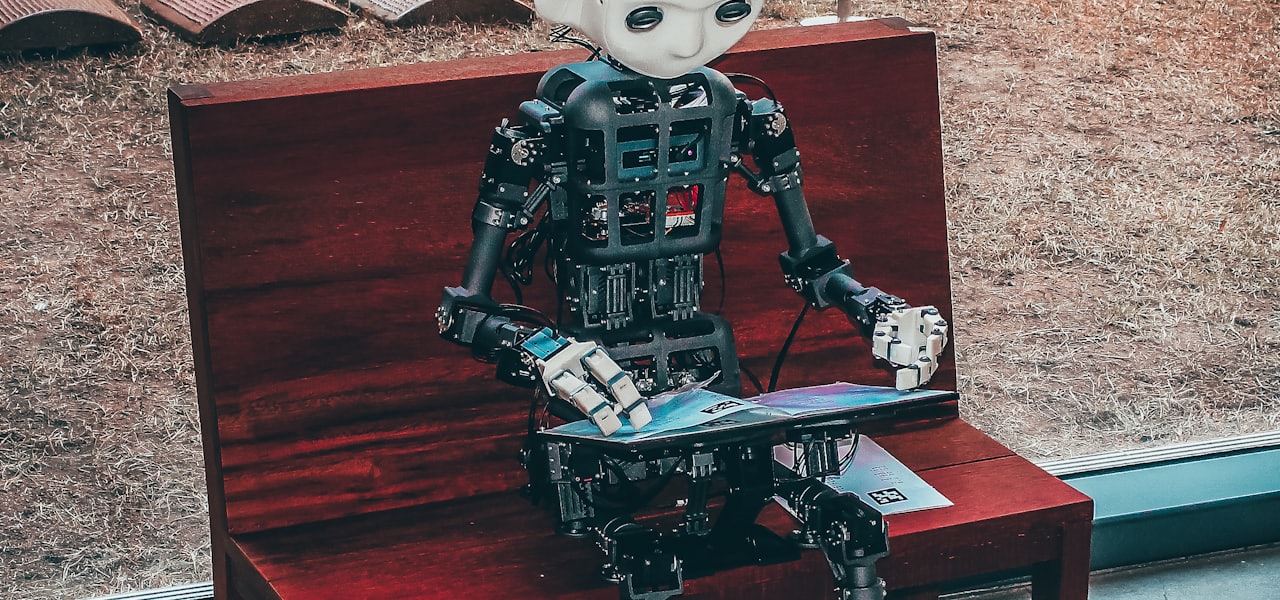
Humans have considered and tried to create non-biological life for at least 3,000 years. As seen in tales ranging from Pygmalion to Frankenstein, humanity has long been intrigued by the concept of artificial life. == Pre-computer == The earliest examples of artificial life involve sophisticated automata constructed using pneumatics, mechanics, and/or hydraulics. The first automata were conceived during the third and second centuries BC and these were demonstrated by the theorems of Hero of Alexandria, which included sophisticated mechanical and hydraulic solutions. Many of his notable works were included in the book Pneumatics, which was also used for constructing machines until early modern times. In 1490, Leonardo da Vinci also constructed an armored knight, which is considered the first humanoid robot in Western civilization. Other early famous examples include al-Jazari's humanoid robots. This Arabic inventor once constructed a band of automata, which can be commanded to play different pieces of music. There is also the case of Jacques de Vaucanson's artificial duck exhibited in 1735, which had thousands of moving parts and one of the first to mimic a biological system. The duck could reportedly eat and digest, drink, quack, and splash in a pool. It was exhibited all over Europe until it fell into disrepair. In the late 1600s, following René Descartes' claims that animals could be understood as purely physical machines, there was increasing interest in the question of whether a machine could be designed that, like an animal, could generate offspring (a self-replicating machine). However, it wasn't until the invention of cheap computing power that artificial life as a legitimate science began in earnest, steeped more in the theoretical and computational than the mechanical and mythological. == 1950s–1970s == One of the earliest thinkers of the modern age to postulate the potentials of artificial life, separate from artificial intelligence, was math and computer prodigy John von Neumann. At the Hixon Symposium, hosted by Linus Pauling in Pasadena, California in the late 1940s, von Neumann delivered a lecture titled "The General and Logical Theory of Automata." He defined an "automaton" as any machine whose behavior proceeded logically from step to step by combining information from the environment and its own programming, and said that natural organisms would in the end be found to follow similar simple rules. He also spoke about the idea of self-replicating machines. He postulated a made-up of a control computer, a construction arm, and a long series of instructions, floating in a lake of parts. By following the instructions that were part of its own body, it could create an identical machine. He followed this idea by creating (with Stanislaw Ulam) a purely logic-based automaton, not requiring a physical body but based on the changing states of the cells in an infinite grid – the first cellular automaton. It was extraordinarily complicated compared to later CAs, having hundreds of thousands of cells which could each exist in one of twenty-nine states, but von Neumann felt he needed the complexity in order for it to function not just as a self-replicating "machine", but also as a universal computer as defined by Alan Turing. This "universal constructor" read from a tape of instructions and wrote out a series of cells that could then be made active to leave a fully functional copy of the original machine and its tape. Von Neumann worked on his automata theory intensively right up to his death, and considered it his most important work. Homer Jacobson illustrated basic self-replication in the 1950s with a model train set – a seed "organism" consisting of a "head" and "tail" boxcar could use the simple rules of the system to consistently create new "organisms" identical to itself, so long as there was a random pool of new boxcars to draw from. Edward F. Moore proposed "Artificial Living Plants", which would be floating factories which could create copies of themselves. They could be programmed to perform some function (extracting fresh water, harvesting minerals from seawater) for an investment that would be relatively small compared to the huge returns from the exponentially growing numbers of factories. Freeman Dyson also studied the idea, envisioning self-replicating machines sent to explore and exploit other planets and moons, and a NASA group called the Self-Replicating Systems Concept Team performed a 1980 study on the feasibility of a self-building lunar factory. University of Cambridge professor John Horton Conway invented the most famous cellular automaton in the 1960s. He called it the Game of Life, and publicized it through Martin Gardner's column in Scientific American magazine. Norwegian-Italian mathematician Nils Aall Barricelli, who worked mainly at US institutions, was a pioneer in computer based simulation of biological processes such as symbiogenesis and evolution. == 1970s–1980s == Philosophy scholar Arthur Burks, who had worked with von Neumann (and indeed, organized his papers after Neumann's death), headed the Logic of Computers Group at the University of Michigan. He brought the overlooked views of 19th century American thinker Charles Sanders Peirce into the modern age. Peirce was a strong believer that all of nature's workings were based on logic (though not always deductive logic). The Michigan group was one of the few groups still interested in alife and CAs in the early 1970s; one of its students, Tommaso Toffoli argued in his PhD thesis that the field was important because its results explain the simple rules that underlay complex effects in nature. Toffoli later provided a key proof that CAs were reversible, just as the true universe is considered to be. Christopher Langton was an unconventional researcher, with an undistinguished academic career that led him to a job programming DEC mainframes for a hospital. He became enthralled by Conway's Game of Life, and began pursuing the idea that the computer could emulate living creatures. After years of study, he began attempting to actualize Von Neumann's CA and the work of Edgar F. Codd, who had simplified Von Neumann's original twenty-nine state monster to one with only eight states. He succeeded in creating the first self-replicating computer organism in October 1979, using only an Apple II desktop computer. He entered Burks' graduate program at the Logic of Computers Group in 1982, at the age of 33, and helped to found a new discipline. Langton's official conference announcement of Artificial Life I was the earliest description of a field which had previously barely existed: Artificial life is the study of artificial systems that exhibit behavior characteristic of natural living systems. It is the quest to explain life in any of its possible manifestations, without restriction to the particular examples that have evolved on earth. This includes biological and chemical experiments, computer simulations, and purely theoretical endeavors. Processes occurring on molecular, social, and evolutionary scales are subject to investigation. The ultimate goal is to extract the logical form of living systems. Microelectronic technology and genetic engineering will soon give us the capability to create new life forms in silico as well as in vitro. This capacity will present humanity with the most far-reaching technical, theoretical and ethical challenges it has ever confronted. The time seems appropriate for a gathering of those involved in attempts to simulate or synthesize aspects of living systems. Ed Fredkin founded the Information Mechanics Group at MIT, which united Toffoli, Norman Margolus, and Charles Bennett. This group created a computer especially designed to execute cellular automata, eventually reducing it to the size of a single circuit board. This "cellular automata machine" allowed an explosion of alife research among scientists who could not otherwise afford sophisticated computers. In 1982, computer scientist named Stephen Wolfram turned his attention to cellular automata. He explored and categorized the types of complexity displayed by one-dimensional CAs, and showed how they applied to natural phenomena such as the patterns of seashells and the nature of plant growth. Norman Packard, who worked with Wolfram at the Institute for Advanced Study, used CAs to simulate the growth of snowflakes, following very basic rules. Computer animator Craig Reynolds similarly used three simple rules to create recognizable flocking behaviour in a computer program in 1987 to animate groups of boids. With no top-down programming at all, the boids produced lifelike solutions to evading obstacles placed in their path. Computer animation has continued to be a key commercial driver of alife research as the creators of movies attempt to find more realistic and inexpensive ways to animate natural forms such as plant life, animal movement, hair growth, and complicated org
AI Security Institute
The AI Security Institute (AISI) is a research organisation under the Department for Science, Innovation and Technology, UK, that aims "to equip governments with a scientific understanding of the risks posed by advanced AI". It conducts research and develop and test mitigations. Previously, it was known as the AI Safety Institute. Its creation followed world's first major AI Safety Summit that was held in Bletchley Park in 2023. The institute's professed goal is "building the world's leading understanding of advanced AI risks and solutions, to inform governments so they can keep the public safe". It is designed like a startup in the government "combining the authority of government with the expertise and agility of the private sector". AISI has made access agreements with Anthropic, Google and OpenAI to test their models before release. It has an open source platform called Inspect that permits companies, governments and academics to run standardised safety tests for AI usage. Among the works AISI has done is the reported detection of multiple serious vulnerabilities that could enable development of biological weapons; the vulnerabilities were fixed before the model was launched. It conducts research on diverse fields of AI application. One study by AISI found that LLMs post-trained for political persuasiveness became systematically less accurate and up to 51% more persuasive on political issues. AISI has also worked on the usage of AI for emotional needs. It found that nearly 10 percent of UK citizens used systems like chatbots for emotional purposes on a weekly basis. It found that "systems are now outperforming PhD-level researchers on scientific knowledge tests and helping non-experts succeed at lab work that would previously have been out of reach" in a report published in December 2025. Former chief AI officer of GCHQ Adam Beaumont is the institution's interim director. UK prime minister's AI advisor Jade Leung is the chief technology officer.
Mixed raster content
Mixed raster content (MRC) is a method for compressing images that contain both binary-compressible text and continuous-tone components, using image segmentation methods to improve the level of compression and the quality of the rendered image. By separating the image into components with different compressibility characteristics, the most efficient and accurate compression algorithm for each component can be applied. MRC-compressed images are typically packaged into a hybrid file format such as DjVu and sometimes PDF. This allows for multiple images, and the instructions to properly render and reassemble them, to be stored within a single file. Some image scanners optionally support MRC when scanning to PDF. A typical manual states that without MRC, the image is generated in a single process, with text and graphics not distinguished. With MRC, separate processes are used for text, graphics, and other elements, producing clearer graphics and sharper text, at the price of slightly slower processing. MRC is recommended to optimise the scanning of documents with harder-to-read text or lower-quality graphics. MRC can also reduce the size of the scanned file, though higher compression using JBIG2 can sometimes lead to character substitution errors in scanned documents. == File format == A form of MRC is defined by international standard bodies as ISO/IEC 16485, or ITU recommendation T.44 (accessible free of charge). It defines a file format with bilevel masks and two data layers in each "stripe" of the image. The mask can be encoded in ITU T.4, JBIG1, or JBIG2, while the images can be JPEG, JBIG1, or run-length encoded color. The format is loosely based on JPEG, with a APP13 segment registered for this purpose. It is not known whether this file format is actually used, as formats like DjVu and PDF have their own ways of defining layers and masks.
Hekaton (database)
Hekaton (also known as SQL Server In-Memory OLTP) is an in-memory database for OLTP workloads built into Microsoft SQL Server. Hekaton was designed in collaboration with Microsoft Research and was released in SQL Server 2014. Traditional RDBMS systems were designed when memory resources were expensive, and were optimized for disk storage. Hekaton is instead optimized for a working set stored entirely in main memory, but is still accessible via T-SQL like normal tables. It is fundamentally different from the "DBCC PINTABLE" feature in earlier SQL Server versions. Hekaton was announced at the Professional Association for SQL Server (PASS) conference 2012.
Hooked (app)
Hooked is a mobile application where users can write or read chat fiction, short pieces of fiction told in the format of text messages between fictional characters. The app was released in September 2015 and was developed by Telepathic Inc. == Features == Hooked is a freemium smartphone app that allows users to write or read short stories made up of text messages between characters. CEO Prerna Gupta described the app as "books for the Snapchat generation" or "Twitter for fiction." As of March 2019, the app had more than 40 million active users. The stories are written by a mix of professional authors and crowd-sourced participants. The most popular genres are suspense and horror. The stories usually lack literary elements like character arcs, are simply written and are intended to be suspenseful or addicting. Each piece of fiction on the app is approximately 1,000 to 1,300 words long and can be read in about five minutes. Some longer stories are told in "chapters" and a 32,000-word thriller called Dark Matter was released in 2018. The app provides a certain number of text messages for free, then delays the next text message by 15 minutes unless the user pays for a subscription. Prior to 2020, the app offered a three-day free trial and then required users to pay. According to Gupta, the app was intended to get the younger generation to read more without getting distracted. Most users of the app are between 13 and 24 years-old. == History == The Hooked app was first released in September 2015. Initially, Hooked featured about 200 stories that were written by professional authors selected by the app developers. The following year, Telepathic Inc. released Hooked 2.0, which allowed users of the app to create and share their own short stories. By mid-2016, the app had 700 stories written by professional authors and 9,000 stories written by users. Hooked had 1.8 million downloads by 2016 and 20 million download as of 2017, which generated $6.5 million in revenue. The response to Hooked prompted others to create similar text-message based short story apps, like Yarn and Tap. Sensor Tower reported that the Hooked app received 2.22 million downloads during the period from October 2016 to March 2017. Starting in 2020, longer stories divided into chapters debuted on the app. In March, the company launched Hooked TV, an app to showcase video pilots based on a number of scripts themed around the app's content. Out of 50 pilots, those that were most popular among users of the app and social media were expanded into original series as Hooked TV evolved into a streaming platform in the second half of 2021. == Background == The idea for Hooked was conceived when Gupta was working on writing a book of her own. Prerna Gupta and her husband Parag Chordia tested short stories with 15,000 people and found that readers were five times more likely to read a story to its end if the story was presented in a text message format. They created Telepathic Inc., which developed Hooked. According to Celebrity Secret when they first started out, the stories were basically as if two people were texting each other and some sort of drama unfolds. Some of their most popular initial stories were actually horror stories, where a mom gets a text from her daughter and something creepy is happening to her. Over time, they started to turn those into podcasts, which then led to making their own movies and TV shows. As of 2017, the Telepathic has raised $6 million in funding to develop and support the Hooked app. From the main website itself the Hooked investors include Sound Ventures, The Chernin Group, WME/Endeavor, MACRO, Greg Silverman, Steph Curry, Kevin Durant, LeBron James, Mariah Carey, Jamie Foxx, Joe Montana, Aasif Mandvi, Max Martin, Anjula Acharia, Savan Kotecha, Cyan Banister, Eric Ries, A Capital, SV Angel, Cowboy Ventures, Founders Fund and Greylock, among many others.
Application-release automation
Application-release automation (ARA) refers to the process of packaging and deploying an application or update of an application from development, across various environments, and ultimately to production. ARA solutions must combine the capabilities of deployment automation, environment management and modeling, and release coordination. == Relationship with DevOps == ARA tools help cultivate DevOps best practices by providing a combination of automation, environment modeling and workflow-management capabilities. These practices help teams deliver software rapidly, reliably and responsibly. ARA tools achieve a key DevOps goal of implementing continuous delivery with a large quantity of releases quickly. == Relationship with deployment == ARA is more than just software-deployment automation – it deploys applications using structured release-automation techniques that allow for an increase in visibility for the whole team. It combines workload automation and release-management tools as they relate to release packages, as well as movement through different environments within the DevOps pipeline. ARA tools help regulate deployments, how environments are created and deployed, and how and when releases are deployed. == ARA Solutions == All ARA solutions must include capabilities in automation, environment modeling, and release coordination. Additionally, the solution must provide this functionality without reliance on other tools.
Tessellation (computer graphics)
In computer graphics, tessellation is the dividing of datasets of polygons (sometimes called vertex sets) presenting objects in a scene into suitable structures for rendering. Especially for real-time rendering, data is tessellated into triangles, for example in OpenGL 4.0 and Direct3D 11. == In graphics rendering == A key advantage of tessellation for realtime graphics is that it allows detail to be dynamically added and subtracted from a 3D polygon mesh and its silhouette edges based on control parameters (often camera distance). In previously leading realtime techniques such as parallax mapping and bump mapping, surface details could be simulated at the pixel level, but silhouette edge detail was fundamentally limited by the quality of the original dataset. In Direct3D 11 pipeline (a part of DirectX 11), the graphics primitive is the patch. The tessellator generates a triangle-based tessellation of the patch according to tessellation parameters such as the TessFactor, which controls the degree of fineness of the mesh. The tessellation, along with shaders such as a Phong shader, allows for producing smoother surfaces than would be generated by the original mesh. By offloading the tessellation process onto the GPU hardware, smoothing can be performed in real time. Tessellation can also be used for implementing subdivision surfaces, level of detail scaling and fine displacement mapping. OpenGL 4.0 uses a similar pipeline, where tessellation into triangles is controlled by the Tessellation Control Shader and a set of four tessellation parameters. == In computer-aided design == In computer-aided design the constructed design is represented by a boundary representation topological model, where analytical 3D surfaces and curves, limited to faces, edges, and vertices, constitute a continuous boundary of a 3D body. Arbitrary 3D bodies are often too complicated to analyze directly. So they are approximated (tessellated) with a mesh of small, easy-to-analyze pieces of 3D volume—usually either irregular tetrahedra, or irregular hexahedra. The mesh is used for finite element analysis. The mesh of a surface is usually generated per individual faces and edges (approximated to polylines) so that original limit vertices are included into mesh. To ensure that approximation of the original surface suits the needs of further processing, three basic parameters are usually defined for the surface mesh generator: The maximum allowed distance between the planar approximation polygon and the surface (known as "sag"). This parameter ensures that mesh is similar enough to the original analytical surface (or the polyline is similar to the original curve). The maximum allowed size of the approximation polygon (for triangulations it can be maximum allowed length of triangle sides). This parameter ensures enough detail for further analysis. The maximum allowed angle between two adjacent approximation polygons (on the same face). This parameter ensures that even very small humps or hollows that can have significant effect to analysis will not disappear in mesh. An algorithm generating a mesh is typically controlled by the above three and other parameters. Some types of computer analysis of a constructed design require an adaptive mesh refinement, which is a mesh made finer (using stronger parameters) in regions where the analysis needs more detail.