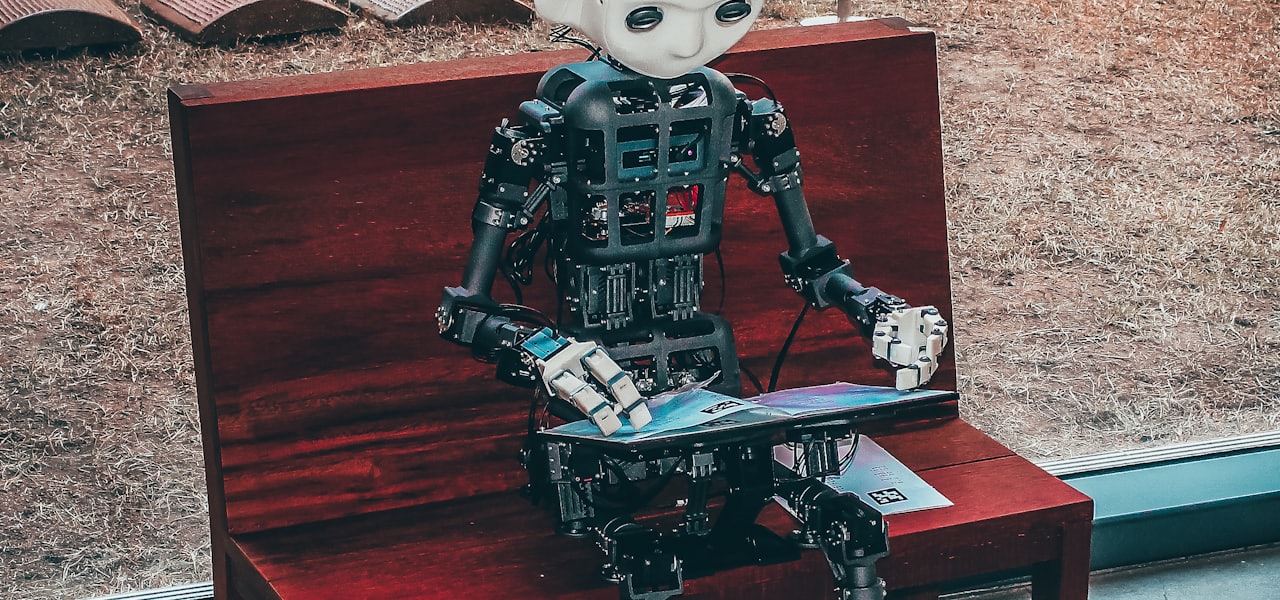
Eyes of Things (EoT) is the name of a project funded by the European Union’s Horizon 2020 Research and Innovation Programme under grant agreement number 643924. The purpose of the project, which is funded under the Smart Cyber-physical systems topic, is to develop a generic hardware-software platform for embedded, efficient (i.e. battery-operated, wearable, mobile), computer vision, including deep learning inference. On November 29, 2018, the European Space Agency announced that it was testing the suitability of the device for space applications in advance of a flight in a Cubesat. == Motivation == EoT is based on the following tenets: Future embedded systems will have more intelligence and cognitive functionality. Vision is paramount to such intelligent capacity Unlike other sensors, vision requires intensive processing. Power consumption must be optimized if vision is to be used in mobile and wearable applications Cloud processing of edge-captured images is not sustainable. The sheer amount of visual data generated cannot be transferred to the cloud. Bandwidth is not sufficient and cloud servers cannot cope with it. == Partners == VISILAB group at University of Castilla–La Mancha (Coordinator) Movidius Awaiba Thales Security Solutions & Systems DFKI Fluxguide Evercam nVISO == Awards == 2019 Electronic Component and Systems Innovation Award by the European Commission 2018 HiPEAC Tech Transfer Award 2018 EC Innovation Radar - highlighting excellent innovations Award 2018 Internet of Things (IoT) Technology Research Award Pilot by Google 2016 Semifinalist "THE VISION SHOW STARTUP COMPETITION", Global Association for Vision Information, Boston US
Data augmentation
Data augmentation is a statistical technique which allows maximum likelihood estimation from incomplete data. Data augmentation has important applications in Bayesian analysis, and the technique is widely used in machine learning to reduce overfitting when training machine learning models, achieved by training models on several slightly-modified copies of existing data. == Synthetic oversampling techniques for traditional machine learning == Synthetic Minority Over-sampling Technique (SMOTE) is a method used to address imbalanced datasets in machine learning. In such datasets, the number of samples in different classes varies significantly, leading to biased model performance. For example, in a medical diagnosis dataset with 90 samples representing healthy individuals and only 10 samples representing individuals with a particular disease, traditional algorithms may struggle to accurately classify the minority class. SMOTE rebalances the dataset by generating synthetic samples for the minority class. For instance, if there are 100 samples in the majority class and 10 in the minority class, SMOTE can create synthetic samples by randomly selecting a minority class sample and its nearest neighbors, then generating new samples along the line segments joining these neighbors. This process helps increase the representation of the minority class, improving model performance. == Data augmentation for image classification == When convolutional neural networks grew larger in mid-1990s, there was a lack of data to use, especially considering that some part of the overall dataset should be spared for later testing. It was proposed to perturb existing data with affine transformations to create new examples with the same labels, which were complemented by so-called elastic distortions in 2003, and the technique was widely used as of 2010s. Data augmentation can enhance CNN performance and acts as a countermeasure against CNN profiling attacks. Data augmentation has become fundamental in image classification, enriching training dataset diversity to improve model generalization and performance. The evolution of this practice has introduced a broad spectrum of techniques, including geometric transformations, color space adjustments, and noise injection. === Geometric Transformations === Geometric transformations alter the spatial properties of images to simulate different perspectives, orientations, and scales. Common techniques include: Affine Transformation Rotation: Rotating images by a specified degree to help models recognize objects at various angles. Reflection: Reflecting images horizontally or vertically to introduce variability in orientation. Translation: Shifting images in different directions to teach models positional invariance. Scaling Shear Mapping Cropping: Removing sections of the image to focus on particular features or simulate closer views. Elastic Distortion Morphing within the same class: Generating new samples by applying morphing techniques between two images belonging to the same class, thereby increasing intra-class diversity. === Color Space Transformations === Color space transformations modify the color properties of images, addressing variations in lighting, color saturation, and contrast. Techniques include: Brightness Adjustment: Varying the image's brightness to simulate different lighting conditions. Contrast Adjustment: Changing the contrast to help models recognize objects under various clarity levels. Saturation Adjustment: Altering saturation to prepare models for images with diverse color intensities. Color Jittering: Randomly adjusting brightness, contrast, saturation, and hue to introduce color variability. === Noise Injection === Injecting noise into images simulates real-world imperfections, teaching models to ignore irrelevant variations. Techniques involve: Gaussian Noise: Adding Gaussian noise mimics sensor noise or graininess. Salt and Pepper Noise: Introducing black or white pixels at random simulates sensor dust or dead pixels. == Data augmentation for signal processing == Residual or block bootstrap can be used for time series augmentation. === Biological signals === Synthetic data augmentation is of paramount importance for machine learning classification, particularly for biological data, which tend to be high dimensional and scarce. The applications of robotic control and augmentation in disabled and able-bodied subjects still rely mainly on subject-specific analyses. Data scarcity is notable in signal processing problems such as for Parkinson's Disease Electromyography signals, which are difficult to source - Zanini, et al. noted that it is possible to use a generative adversarial network (in particular, a DCGAN) to perform style transfer in order to generate synthetic electromyographic signals that corresponded to those exhibited by sufferers of Parkinson's Disease. The approaches are also important in electroencephalography (brainwaves). Wang, et al. explored the idea of using deep convolutional neural networks for EEG-Based Emotion Recognition, results show that emotion recognition was improved when data augmentation was used. A common approach is to generate synthetic signals by re-arranging components of real data. Lotte proposed a method of "Artificial Trial Generation Based on Analogy" where three data examples x 1 , x 2 , x 3 {\displaystyle x_{1},x_{2},x_{3}} provide examples and an artificial x s y n t h e t i c {\displaystyle x_{synthetic}} is formed which is to x 3 {\displaystyle x_{3}} what x 2 {\displaystyle x_{2}} is to x 1 {\displaystyle x_{1}} . A transformation is applied to x 1 {\displaystyle x_{1}} to make it more similar to x 2 {\displaystyle x_{2}} , the same transformation is then applied to x 3 {\displaystyle x_{3}} which generates x s y n t h e t i c {\displaystyle x_{synthetic}} . This approach was shown to improve performance of a Linear Discriminant Analysis classifier on three different datasets. Current research shows great impact can be derived from relatively simple techniques. For example, Freer observed that introducing noise into gathered data to form additional data points improved the learning ability of several models which otherwise performed relatively poorly. Tsinganos et al. studied the approaches of magnitude warping, wavelet decomposition, and synthetic surface EMG models (generative approaches) for hand gesture recognition, finding classification performance increases of up to +16% when augmented data was introduced during training. More recently, data augmentation studies have begun to focus on the field of deep learning, more specifically on the ability of generative models to create artificial data which is then introduced during the classification model training process. In 2018, Luo et al. observed that useful EEG signal data could be generated by Conditional Wasserstein Generative Adversarial Networks (GANs) which was then introduced to the training set in a classical train-test learning framework. The authors found classification performance was improved when such techniques were introduced. === Mechanical signals === The prediction of mechanical signals based on data augmentation brings a new generation of technological innovations, such as new energy dispatch, 5G communication field, and robotics control engineering. In 2022, Yang et al. integrate constraints, optimization and control into a deep network framework based on data augmentation and data pruning with spatio-temporal data correlation, and improve the interpretability, safety and controllability of deep learning in real industrial projects through explicit mathematical programming equations and analytical solutions.
Kindara
Kindara is a femtech company headquartered in Colorado that develops apps that help women identify their fertile window. The products are used for women trying to get pregnant, or women who want to track their menstrual cycle for overall health. Their latest product, Priya Fertility and Ovulation Monitor, maximizes a woman's chance of getting pregnancy by identifying her most fertile days. == Overview == Kindara was founded in 2011 by husband-and-wife team Will Sacks and Kati Bicknell. The company launched its free mobile application in 2012. Kindara's mobile application allows women to track signs of fertility, such as basal body temperature, cervical fluid, and the position of the cervix to determine when ovulation is occurring. Kindara also sells a thermometer, Wink, which records basal body temperature and syncs automatically to the Kindara fertility application. In 2018, Kindara was acquired by the company Prima-Temp.
Whitelist
A whitelist or allowlist is a list or register of entities that are being provided a particular privilege, service, mobility, access or recognition. Entities on the list will be accepted, approved and/or recognized. Whitelisting is the reverse of blacklisting, the practice of identifying entities that are denied, unrecognized, or ostracized. == Email whitelists == Spam filters often include the ability to "whitelist" certain sender IP addresses, email addresses or domain names to protect their email from being rejected or sent to a junk mail folder. These can be manually maintained by the user or system administrator - but can also refer to externally maintained whitelist services. === Non-commercial whitelists === Non-commercial whitelists are operated by various non-profit organizations, ISPs, and others interested in blocking spam. Rather than paying fees, the sender must pass a series of tests; for example, their email server must not be an open relay and have a static IP address. The operator of the whitelist may remove a server from the list if complaints are received. === Commercial whitelists === Commercial whitelists are a system by which an Internet service provider allows someone to bypass spam filters when sending email messages to its subscribers, in return for a pre-paid fee, either an annual or a per-message fee. A sender can then be more confident that their messages have reached recipients without being blocked, or having links or images stripped out of them, by spam filters. The purpose of commercial whitelists is to allow companies to reliably reach their customers by email. == Advertising whitelist == Many websites rely on ads as a source of revenue, but the use of ad blockers is increasingly common. Websites that detect an adblocker in use often ask for it to be disabled - or their site to be "added to the whitelist" - a standard feature of most adblockers. == Network whitelists == === LAN whitelists === A use for whitelists is in local area network (LAN) security. Many network admins set up MAC address whitelists, or a MAC address filter, to control who is allowed on their networks. This is used when encryption is not a practical solution or in tandem with encryption. However, it's sometimes ineffective because a MAC address can be faked. === IP whitelist === Firewalls can usually be configured to only allow data-traffic from/to certain (ranges of) IP-addresses. === Application whitelists === One approach in combating viruses and malware is to whitelist software which is considered safe to run, blocking all others. This is particularly attractive in a corporate environment, where there are typically already restrictions on what software is approved. Leading providers of application whitelisting technology include Bit9, Velox, McAfee, Lumension, ThreatLocker, Airlock Digital and SMAC. On Microsoft Windows, recent versions include AppLocker, which allows administrators to control which executable files are denied or allowed to execute. With AppLocker, administrators are able to create rules based on file names, publishers or file location that will allow certain files to execute. Rules can apply to individuals or groups. Policies are used to group users into different enforcement levels. For example, some users can be added to a report-only policy that will allow administrators to understand the impact before moving that user to a higher enforcement level. Linux systems typically have AppArmor and SE Linux features available which can be used to effectively block all applications which are not explicitly whitelisted, and commercial products are also available. On HP-UX introduced a feature called "HP-UX Whitelisting" on 11iv3 version. == Controversy regarding name == In 2018, a journal commentary on a report on predatory publishing was released making claims that "white" and "black" are racially charged terms that need to be avoided in instances such as "whitelist" and "blacklist". The premise of the journal is that "black" and "white" have negative and positive connotations respectively. It states that since "blacklisting" was first referred to during "the time of mass enslavement and forced deportation of Africans to work in European-held colonies in the Americas," the word is therefore related to race. There is no mention of "whitelist" and its origin or relation to race. This issue is most widely disputed in computing industries where "whitelist" and "blacklist" are prevalent (e.g. IP whitelisting). Despite the commentary nature of the journal, some companies and individuals in others have taken to replacing "whitelist" and "blacklist" with new alternatives such as "allow list" and "deny list". Those adopting this change consider using the "whitelist"/"blacklist" names as a code smell. Those that oppose these changes question its attribution to race, citing the same etymology quote that the 2018 journal uses. According to the remark, the term "blacklist" evolved from the term "black book" about a century ago. The term "black book" does not appear to have any etymology or sources that support racial associations, instead originating in the 1400s as a reference to "a list of people who had committed crimes or fallen out of favor with leaders", and popularized by King Henry VIII's literal use of a black book. Others also note the prevalence of positive and negative connotations to "white" and "black" in the Bible, predating attributions to skin tone and slavery. It wasn't until the 1960s Black Power movement that "Black" became a widespread word to refer to one's race as a person of color in America (alternate to African-American) lending itself to the argument that the negative connotation behind "black" and "blacklist" both predate attribution to race.
Fantavision
Fantavision is an animation program by Scott Anderson for the Apple II and published by Broderbund in 1985. Versions were released for the Apple IIGS (1987), Amiga (1988), and MS-DOS (1988). Fantavision allows the creation of vector graphics animations using the mouse and keyboard. The user creates frames, and the software generates the frames between them. Because this is done in real-time, it allows for creative exploration and quick changes. The program uses a graphical user interface in the style of the Macintosh with pull-down menus and black text on a white background. Advertisements claimed Fantavision a revolutionary breakthrough that brings the animation features of "tweening" and "transforming" to home computers. == Reception == Compute! in 1989 called Fantavision the best animation program for the IBM PC, although it noted the inability to draw curves. == Reviews == Games #70
Deep learning in photoacoustic imaging
Photoacoustic imaging (PA) is based on the photoacoustic effect, in which optical absorption causes a rise in temperature, which causes a subsequent rise in pressure via thermo-elastic expansion. This pressure rise propagates through the tissue and is sensed via ultrasonic transducers. Due to the proportionality between the optical absorption, the rise in temperature, and the rise in pressure, the ultrasound pressure wave signal can be used to quantify the original optical energy deposition within the tissue. Photoacoustic imaging has applications of deep learning in both photoacoustic computed tomography (PACT) and photoacoustic microscopy (PAM). PACT utilizes wide-field optical excitation and an array of unfocused ultrasound transducers. Similar to other computed tomography methods, the sample is imaged at multiple view angles, which are then used to perform an inverse reconstruction algorithm based on the detection geometry (typically through universal backprojection, modified delay-and-sum, or time reversal ) to elicit the initial pressure distribution within the tissue. PAM on the other hand uses focused ultrasound detection combined with weakly focused optical excitation (acoustic resolution PAM or AR-PAM) or tightly focused optical excitation (optical resolution PAM or OR-PAM). PAM typically captures images point-by-point via a mechanical raster scanning pattern. At each scanned point, the acoustic time-of-flight provides axial resolution while the acoustic focusing yields lateral resolution. == Applications of deep learning in PACT == The first application of deep learning in PACT was by Reiter et al. in which a deep neural network was trained to learn spatial impulse responses and locate photoacoustic point sources. The resulting mean axial and lateral point location errors on 2,412 of their randomly selected test images were 0.28 mm and 0.37 mm respectively. After this initial implementation, the applications of deep learning in PACT have branched out primarily into removing artifacts from acoustic reflections, sparse sampling, limited-view, and limited-bandwidth. There has also been some recent work in PACT toward using deep learning for wavefront localization. There have been networks based on fusion of information from two different reconstructions to improve the reconstruction using deep learning fusion based networks. === Using deep learning to locate photoacoustic point sources === Traditional photoacoustic beamforming techniques modeled photoacoustic wave propagation by using detector array geometry and the time-of-flight to account for differences in the PA signal arrival time. However, this technique failed to account for reverberant acoustic signals caused by acoustic reflection, resulting in acoustic reflection artifacts that corrupt the true photoacoustic point source location information. In Reiter et al., a convolutional neural network (similar to a simple VGG-16 style architecture) was used that took pre-beamformed photoacoustic data as input and outputted a classification result specifying the 2-D point source location. ==== Deep learning for PA wavefront localization ==== Johnstonbaugh et al. was able to localize the source of photoacoustic wavefronts with a deep neural network. The network used was an encoder-decoder style convolutional neural network. The encoder-decoder network was made of residual convolution, upsampling, and high field-of-view convolution modules. A Nyquist convolution layer and differentiable spatial-to-numerical transform layer were also used within the architecture. Simulated PA wavefronts served as the input for training the model. To create the wavefronts, the forward simulation of light propagation was done with the NIRFast toolbox and the light-diffusion approximation, while the forward simulation of sound propagation was done with the K-Wave toolbox. The simulated wavefronts were subjected to different scattering mediums and Gaussian noise. The output for the network was an artifact free heat map of the targets axial and lateral position. The network had a mean error rate of less than 30 microns when localizing target below 40 mm and had a mean error rate of 1.06 mm for localizing targets between 40 mm and 60 mm. With a slight modification to the network, the model was able to accommodate multi target localization. A validation experiment was performed in which pencil lead was submerged into an intralipid solution at a depth of 32 mm. The network was able to localize the lead's position when the solution had a reduced scattering coefficient of 0, 5, 10, and 15 cm−1. The results of the network show improvements over standard delay-and-sum or frequency-domain beamforming algorithms and Johnstonbaugh proposes that this technology could be used for optical wavefront shaping, circulating melanoma cell detection, and real-time vascular surgeries. === Removing acoustic reflection artifacts (in the presence of multiple sources and channel noise) === Building on the work of Reiter et al., Allman et al. utilized a full VGG-16 architecture to locate point sources and remove reflection artifacts within raw photoacoustic channel data (in the presence of multiple sources and channel noise). This utilization of deep learning trained on simulated data produced in the MATLAB k-wave library, and then later reaffirmed their results on experimental data. === Ill-posed PACT reconstruction === In PACT, tomographic reconstruction is performed, in which the projections from multiple solid angles are combined to form an image. When reconstruction methods like filtered backprojection or time reversal, are ill-posed inverse problems due to sampling under the Nyquist-Shannon's sampling requirement or with limited-bandwidth/view, the resulting reconstruction contains image artifacts. Traditionally these artifacts were removed with slow iterative methods like total variation minimization, but the advent of deep learning approaches has opened a new avenue that utilizes a priori knowledge from network training to remove artifacts. In the deep learning methods that seek to remove these sparse sampling, limited-bandwidth, and limited-view artifacts, the typical workflow involves first performing the ill-posed reconstruction technique to transform the pre-beamformed data into a 2-D representation of the initial pressure distribution that contains artifacts. Then, a convolutional neural network (CNN) is trained to remove the artifacts, in order to produce an artifact-free representation of the ground truth initial pressure distribution. ==== Using deep learning to remove sparse sampling artifacts ==== When the density of uniform tomographic view angles is under what is prescribed by the Nyquist-Shannon's sampling theorem, it is said that the imaging system is performing sparse sampling. Sparse sampling typically occurs as a way of keeping production costs low and improving image acquisition speed. The typical network architectures used to remove these sparse sampling artifacts are U-net and Fully Dense (FD) U-net. Both of these architectures contain a compression and decompression phase. The compression phase learns to compress the image to a latent representation that lacks the imaging artifacts and other details. The decompression phase then combines with information passed by the residual connections in order to add back image details without adding in the details associated with the artifacts. FD U-net modifies the original U-net architecture by including dense blocks that allow layers to utilize information learned by previous layers within the dense block. Another technique was proposed using a simple CNN based architecture for removal of artifacts and improving the k-wave image reconstruction. ==== Removing limited-view artifacts with deep learning ==== When a region of partial solid angles are not captured, generally due to geometric limitations, the image acquisition is said to have limited-view. As illustrated by the experiments of Davoudi et al., limited-view corruptions can be directly observed as missing information in the frequency domain of the reconstructed image. Limited-view, similar to sparse sampling, makes the initial reconstruction algorithm ill-posed. Prior to deep learning, the limited-view problem was addressed with complex hardware such as acoustic deflectors and full ring-shaped transducer arrays, as well as solutions like compressed sensing, weighted factor, and iterative filtered backprojection. The result of this ill-posed reconstruction is imaging artifacts that can be removed by CNNs. The deep learning algorithms used to remove limited-view artifacts include U-net and FD U-net, as well as generative adversarial networks (GANs) and volumetric versions of U-net. One GAN implementation of note improved upon U-net by using U-net as a generator and VGG as a discriminator, with the Wasserstein metric and gradient penalty to stabilize training (WGAN-GP). ==== Pixel-wise interpolation
Swizzling (computer graphics)
In computer graphics, swizzles are a class of operations that transform vectors by rearranging components. Swizzles can also project from a vector of one dimensionality to a vector of another dimensionality, such as taking a three-dimensional vector and creating a two-dimensional or five-dimensional vector using components from the original vector. For example, if A = {1,2,3,4}, where the components are x, y, z, and w respectively, one could compute B = A.wwxy, whereupon B would equal {4,4,1,2}. Additionally, one could create a two-dimensional vector with A.wx or a five-dimensional vector with A.xyzwx. Combining vectors and swizzling can be employed in various ways. This is common in GPGPU applications. In terms of linear algebra, this is equivalent to multiplying by a matrix whose rows are standard basis vectors. If A = ( 1 , 2 , 3 , 4 ) T {\displaystyle A=(1,2,3,4)^{T}} , then swizzling A {\displaystyle A} as above looks like A . w w x y = [ 0 0 0 1 0 0 0 1 1 0 0 0 0 1 0 0 ] [ 1 2 3 4 ] = [ 4 4 1 2 ] . {\displaystyle A.\!wwxy={\begin{bmatrix}0&0&0&1\\0&0&0&1\\1&0&0&0\\0&1&0&0\end{bmatrix}}{\begin{bmatrix}1\\2\\3\\4\end{bmatrix}}={\begin{bmatrix}4\\4\\1\\2\end{bmatrix}}.}